
The traditional flight to quality strategy has focused on building class, technical specifications, design, location and infrastructure. These factors remain fundamental, but recent market research suggests that occupiers are using a broader set of criteria to evaluate office quality. Workplace performance and employee experience are becoming part of that assessment.
This change is closely linked to the way offices are being used today. Hybrid work is already established across many organizations, while companies are also asking employees to spend more time in the office. Recent industry research shows that being with colleagues is one of the main reasons for coming in. At the same time, location and the services available in the building can discourage attendance: about six in ten occupiers identify an inconvenient location as a barrier, while more than half point to a lack of adequate amenities and services.
This puts more pressure on the office to work well once people arrive. Employees need places for meetings, focused work, hybrid calls and informal interaction. A building can have a good location and strong technical specifications but still provide a poor workplace if these activities are difficult to perform.
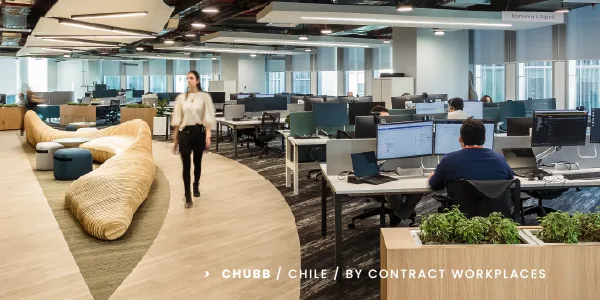
From ‘Flight to Quality’ to ‘Flight to Experience’ in the Office Market
This is the idea behind the shift from flight to quality toward what recent industry research describes as flight to experience. Building quality remains the base. Hospitality, technology that supports hybrid work, useful common areas, accessibility and day-to-day services add another part of the equation. These elements influence how employees use the office and how occupiers experience the building.
Buildings that do not respond to these ways of working can lose attractiveness compared with alternatives that provide a better experience. This does not mean that every asset needs a complete renovation. Improvements to common areas, technology, services or workplace design can address specific problems without changing the entire building.
Latin America’s context and premium asset value
In Latin America, this evolution takes place in a market shaped by economic and geopolitical volatility. According to the original research for this article, these conditions encourage more conservative and cost-sensitive real estate strategies and reinforce interest in consolidated locations and higher-quality assets.⁴ Premium buildings may also be better positioned to preserve occupancy and value when market conditions deteriorate.
The same research suggests that, in some Latin American markets, premium offices can work as a way for investors to preserve capital in periods of greater uncertainty. A relatively limited supply of high-quality office space in parts of the region may reinforce this preference.⁷ These points require additional regional evidence before publication.
Strategies for transforming the office market experience
There is also a gap between the experience companies want to provide and what employees currently receive. According to a recent Americas occupier survey, nearly half of organizations rate their current workplace experience as average or below average compared with peers. More than half are making incremental improvements, while only about one in seven are pursuing a broader workplace transformation.
For owners and investors, this expands the way office quality can be evaluated. Location, infrastructure, building condition and technical specifications remain essential. Workplace design, technology, common areas and service determine how that asset performs during a normal working day.
For occupiers, the same logic helps distinguish between features that simply look premium and investments that solve a real workplace problem. In LATAM, flight to quality is increasingly connected to the building itself, the workplace inside it and the experience delivered every day.
References
1. Cushman & Wakefield, Flight to Experience, 2026.
2. CBRE Research, 2026 Americas Office Occupier Sentiment Survey.

