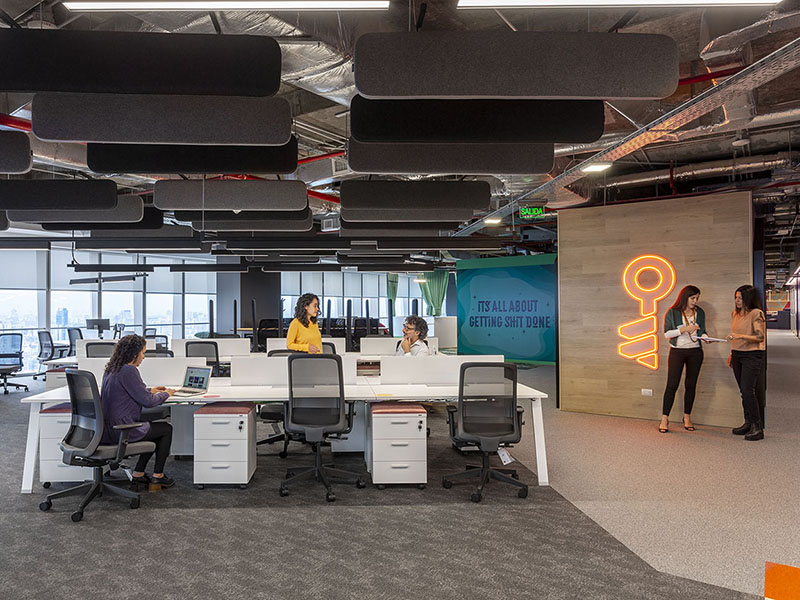
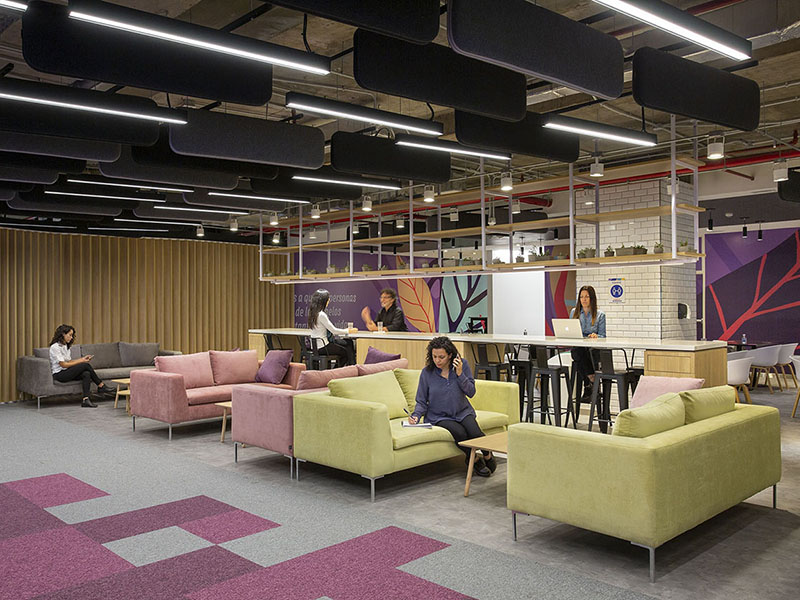
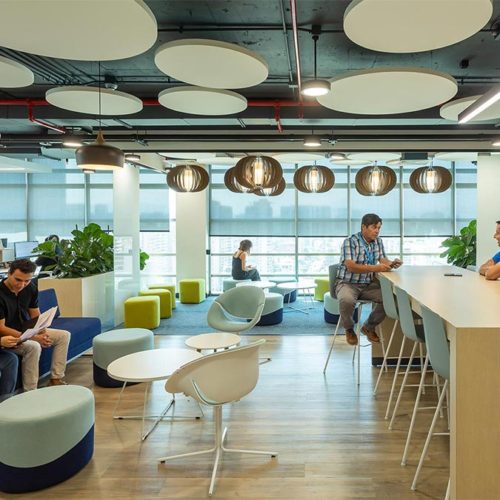
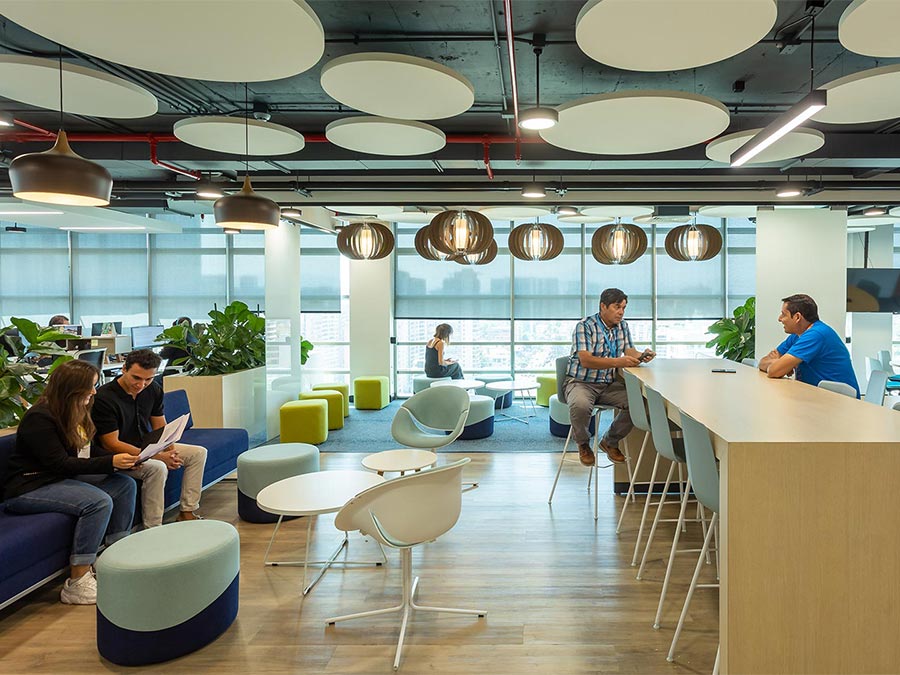
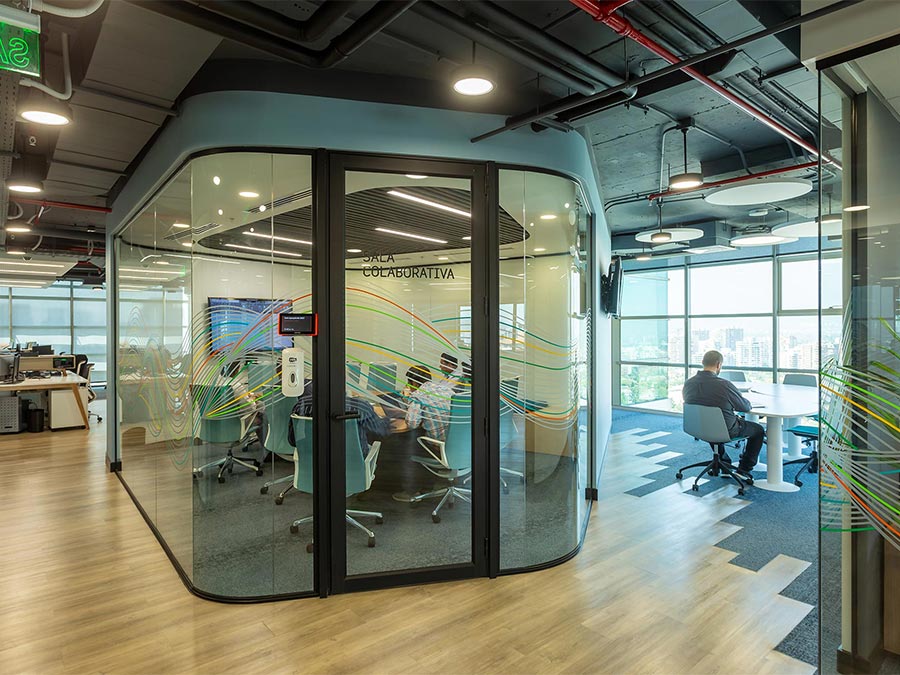
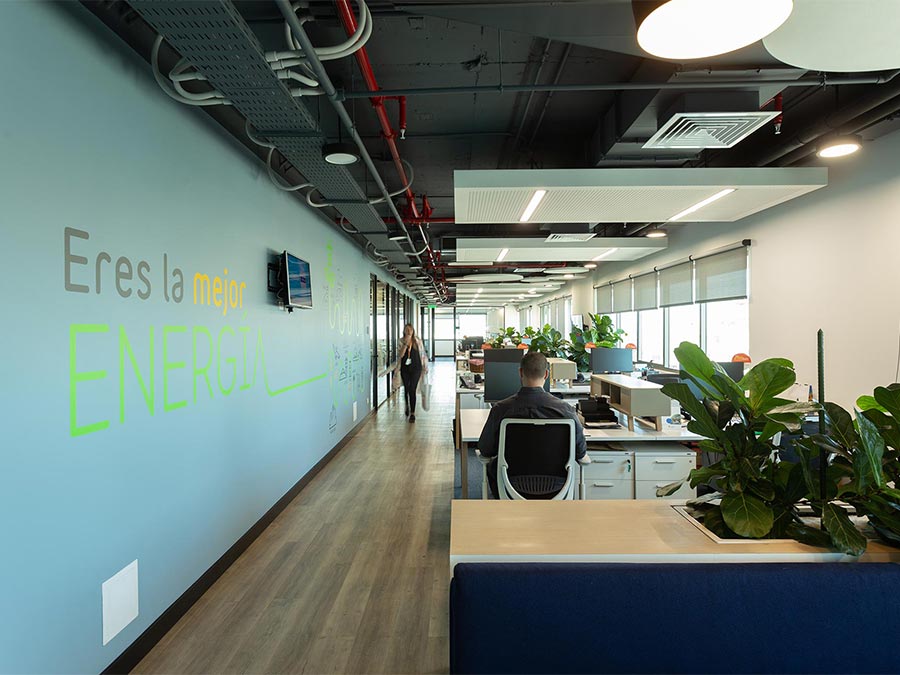
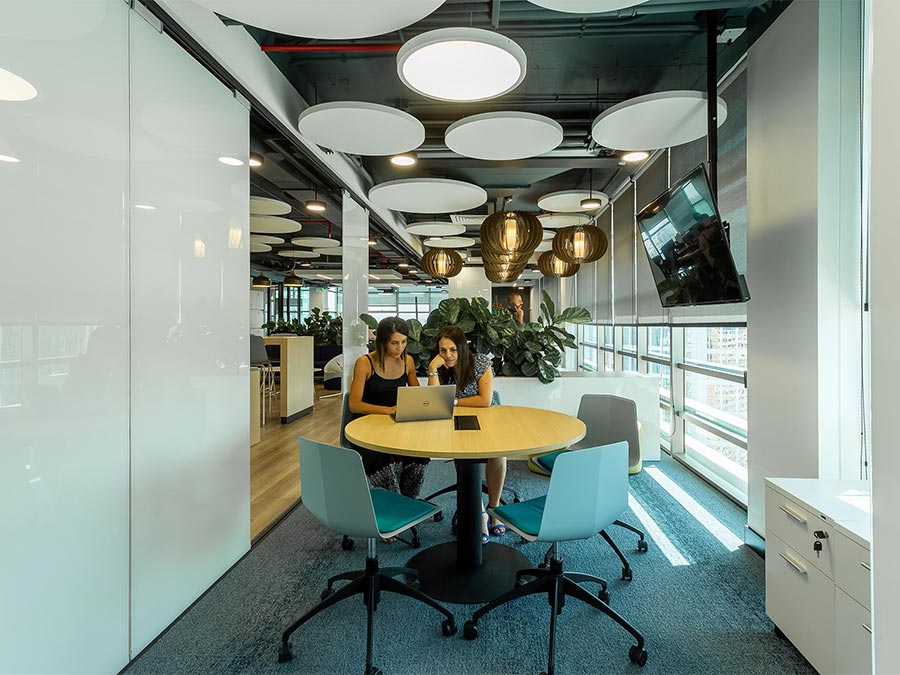
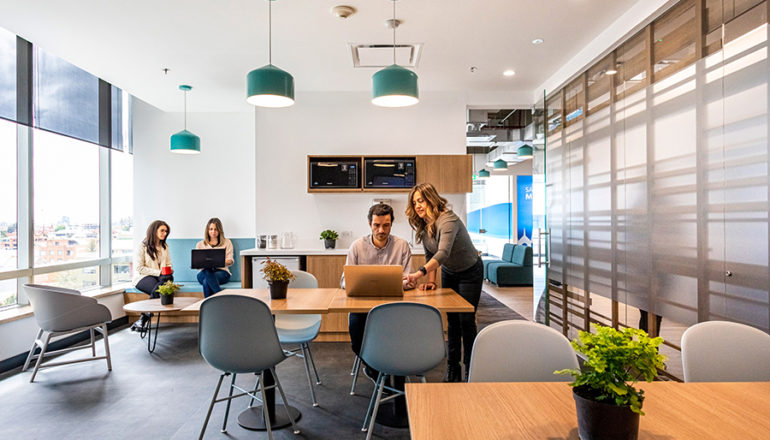
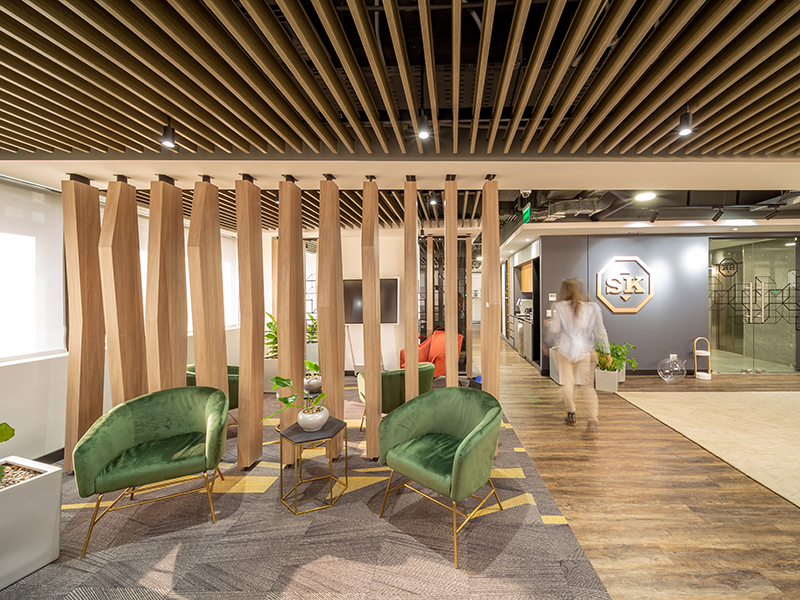
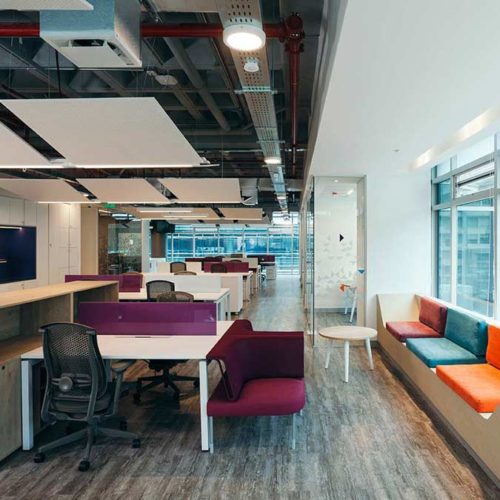
Diseño de oficina de Navent Argentina por Contract Workplaces

Connect users to the home and job of their dreams – Navent Argentina

Navent is a leading company in Latin America founded in Argentina specialized in online classifieds for more than 20 years. The company –which has been growing exponentially since its inception and is now present in 8 countries in the region– is focused on helping people in the search for employment and real estate.

Diseño de oficinas Navent Argentina por Contract Workplaces

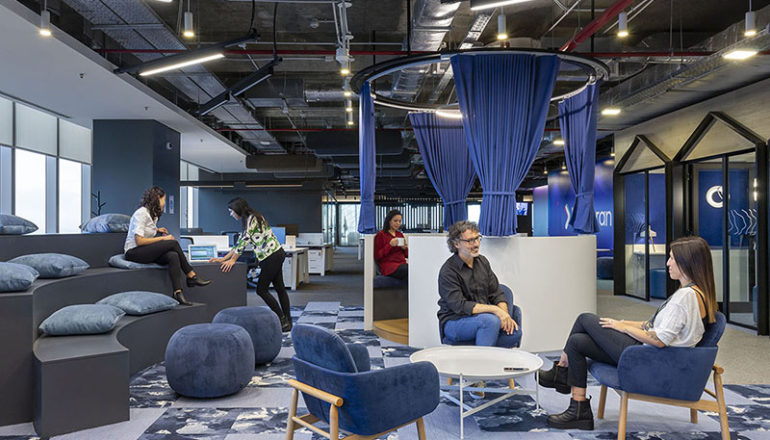
Navent’s new offices in the city of Buenos Aires are located on the 25th floor of a modern tower in the Nuñez neighborhood – a district with a great commercial development – which has panoramic views of the Río de la Plata and the rest of the city. 

In order to give the brand a new and unique identity, the new offices of the company had to meet the objective of bringing together its two main locations in the same workspace, each with different cultures and work dynamics.

The challenge of uniting both worlds began with a consultancy job of Workplace Strategy to understand the present activity in both places, unify requirements and establish common criteria.

Diseño de oficina de Navent Argentina por Contract Workplaces

The conceptual design that was proposed from Contract Workplaces consisted of representing the company’s mission and vision: connecting users with the home and job of their dreams. Thus, “connecting” became both the primary and essential objective of the daily work experience and the starting point for endowing the company with a unique identity.

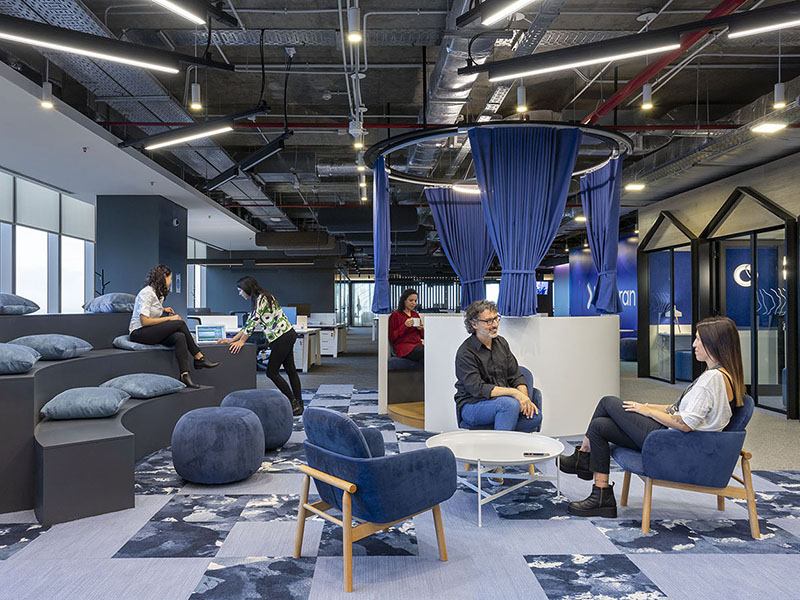
The project was developed on a 2,500 sqm floor plan from four points of interest, or milestones, that connect the different work groups that are located in the interstitial space. These “connectors” not only allow employees to meet to encourage interaction; they also encourage the agile method of work.

Espacios de trabajo de Navent Argentina por Contract Workplaces

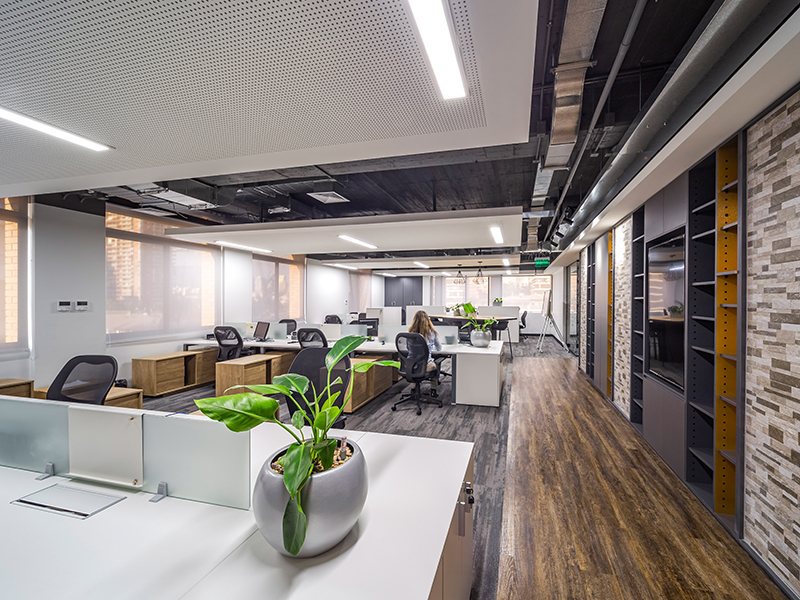
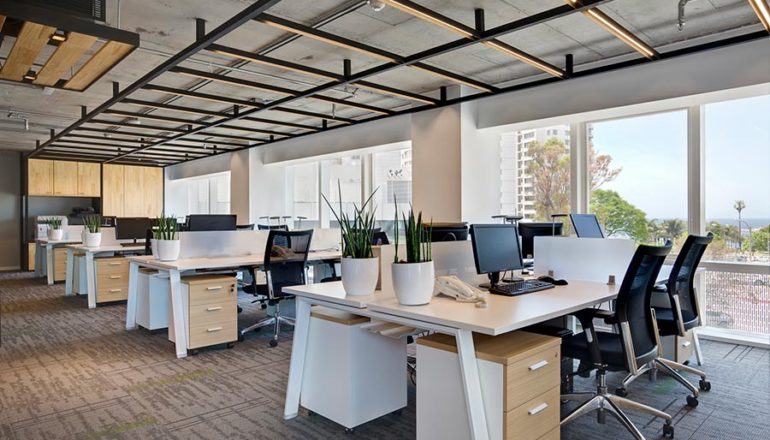
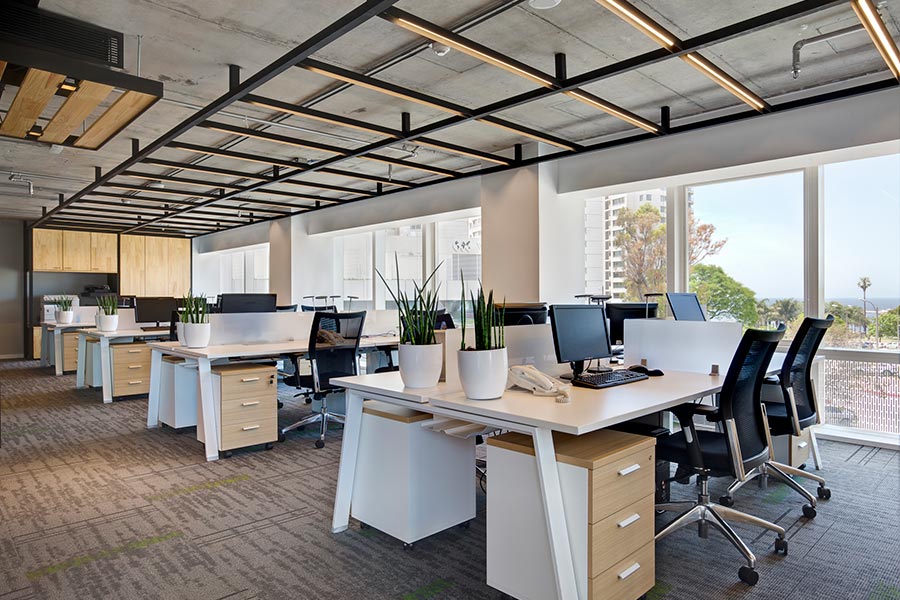
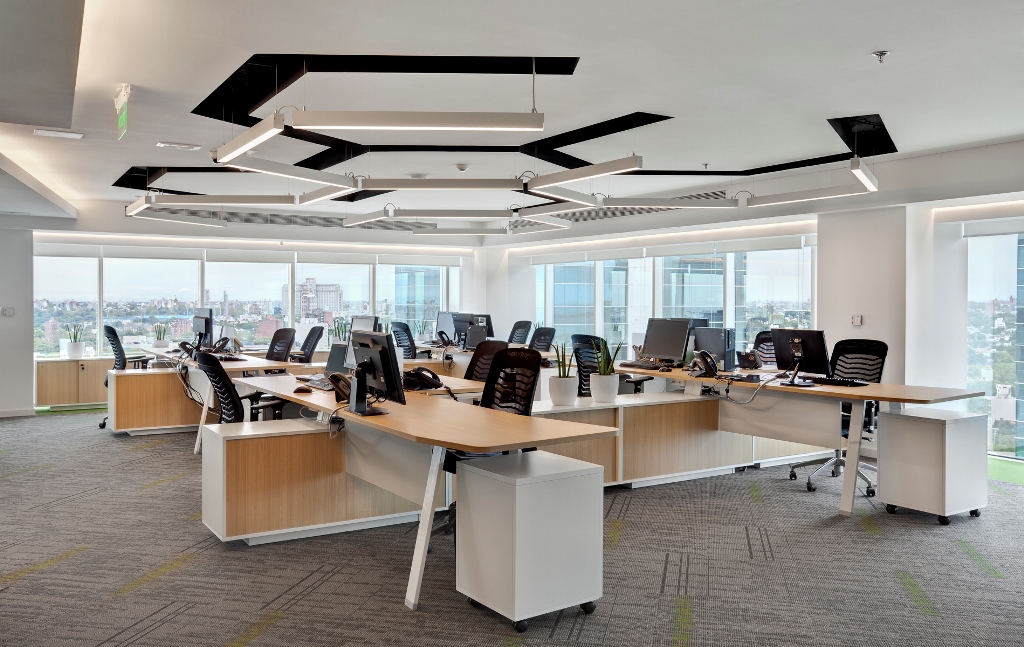
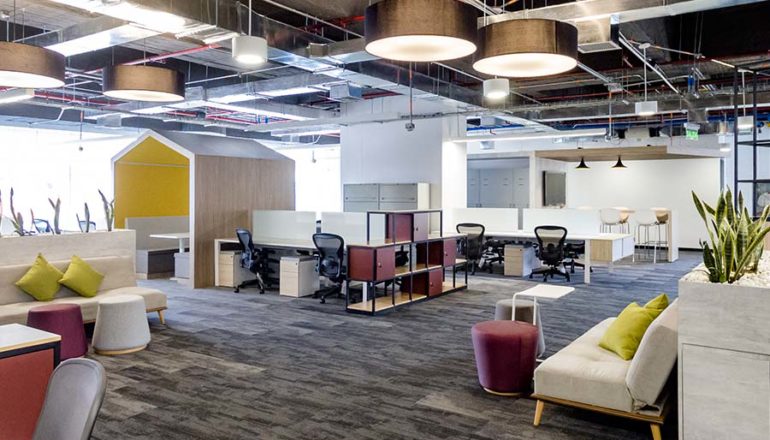
For the operational area, an open-plan design was chosen with the workstations distributed near the perimeter to take advantage of natural light and views to the outside. The oblique arrangement of the desks gives an element of surprise to the layout while transmitting dynamism to the space.

Construcción de oficinas Navent Argentina por Contract Workplaces

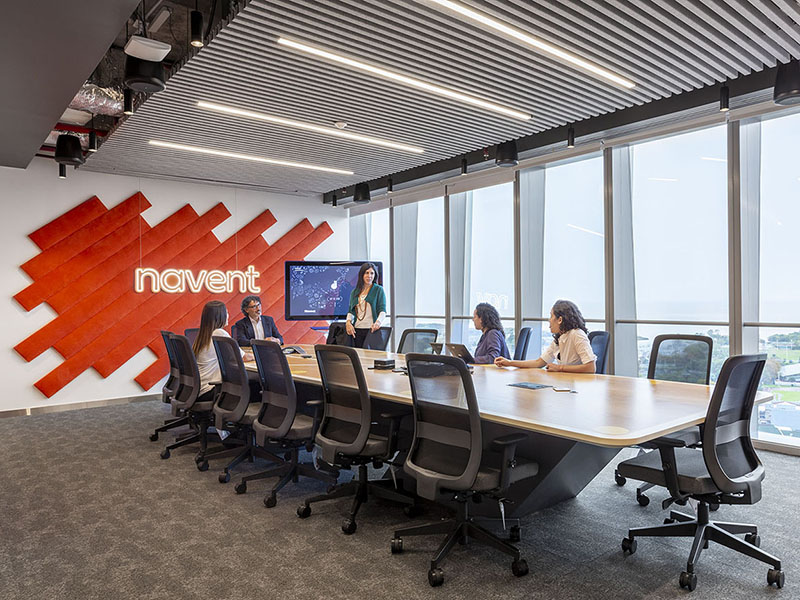
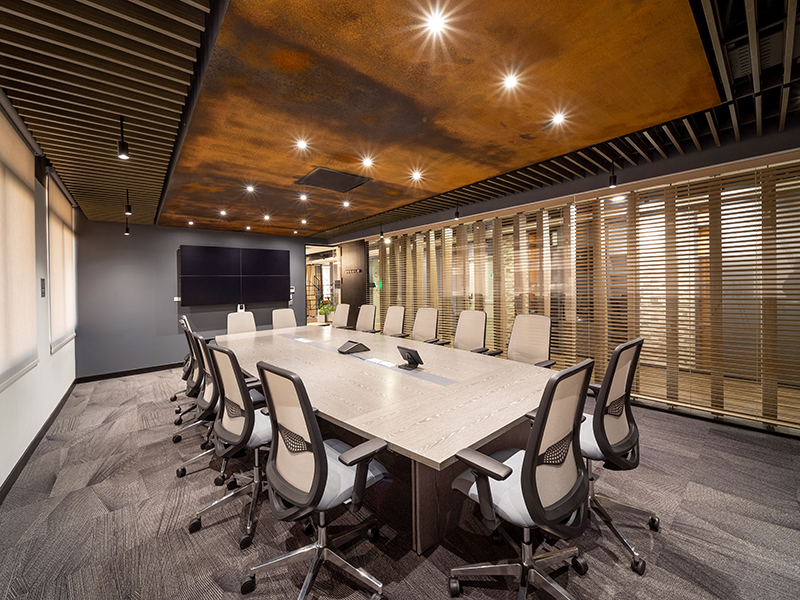
Both the private offices and the formal meeting rooms were located at one end of the floor while the Phone Booths, Meetings and the meeting rooms for few people were arranged in relation to the connectors for public use. In this way, collaborators can go from a spontaneous chat in the stands, for example, to a more private environment in the wide variety of Meetings offered by the project.

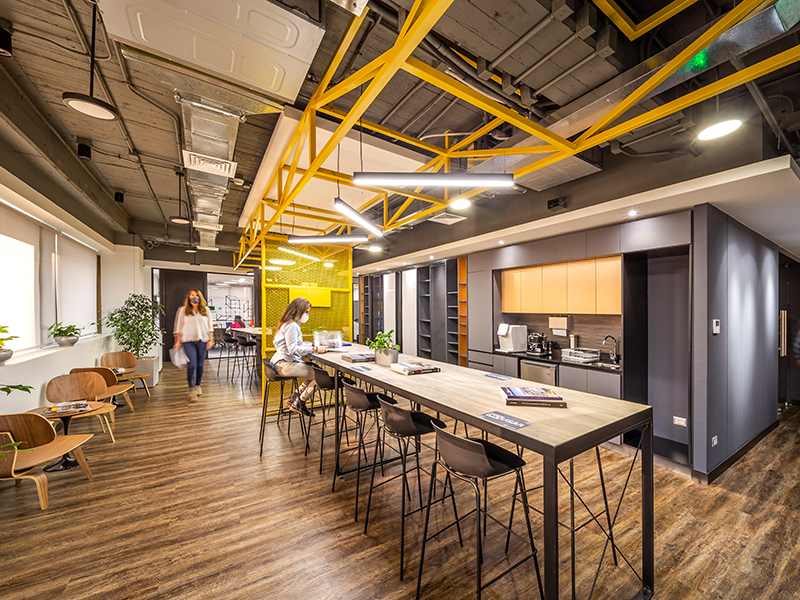
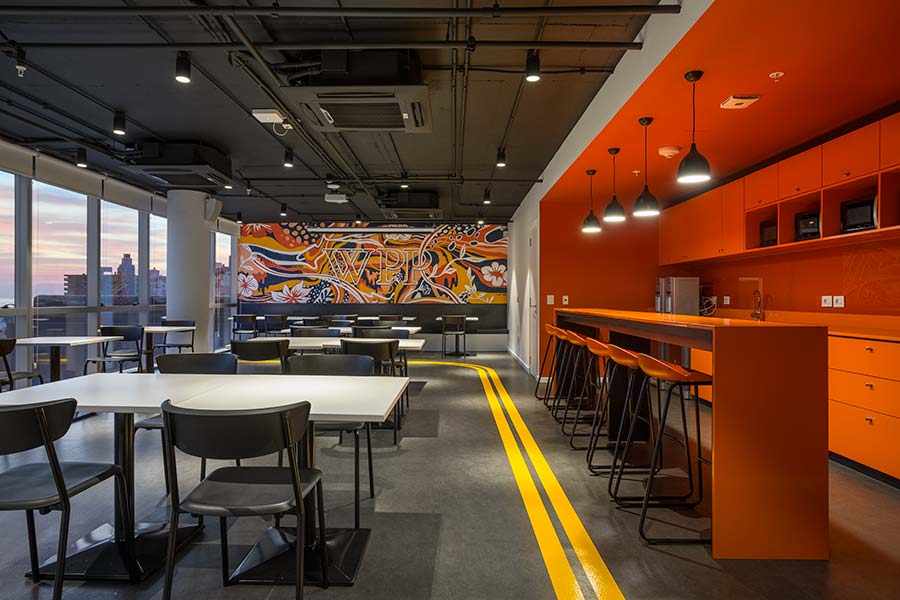
The cafeteria, located near the reception, has an extensive bar that articulates the table area with an area that has lounge chairs, suitable both for relaxing and for working in a more relaxed environment.

Remodelación de oficina de Navent Argentina por Contract Workplaces

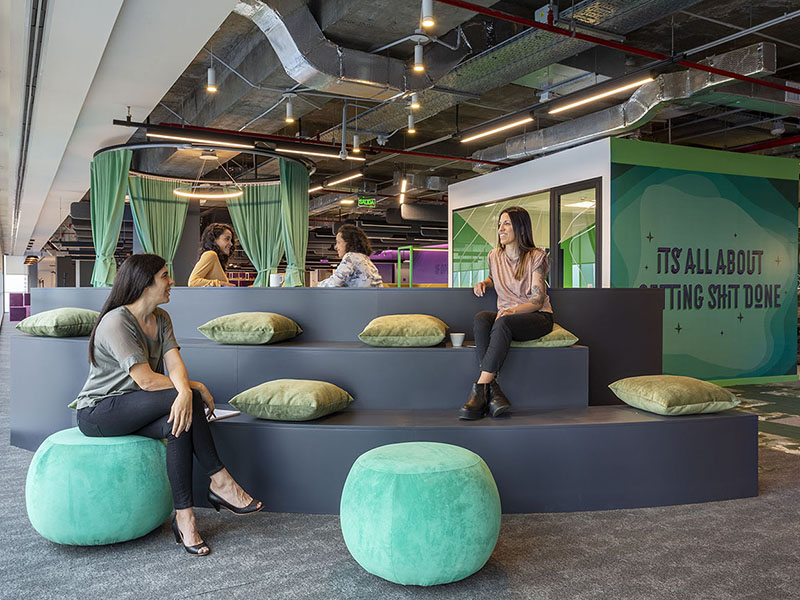
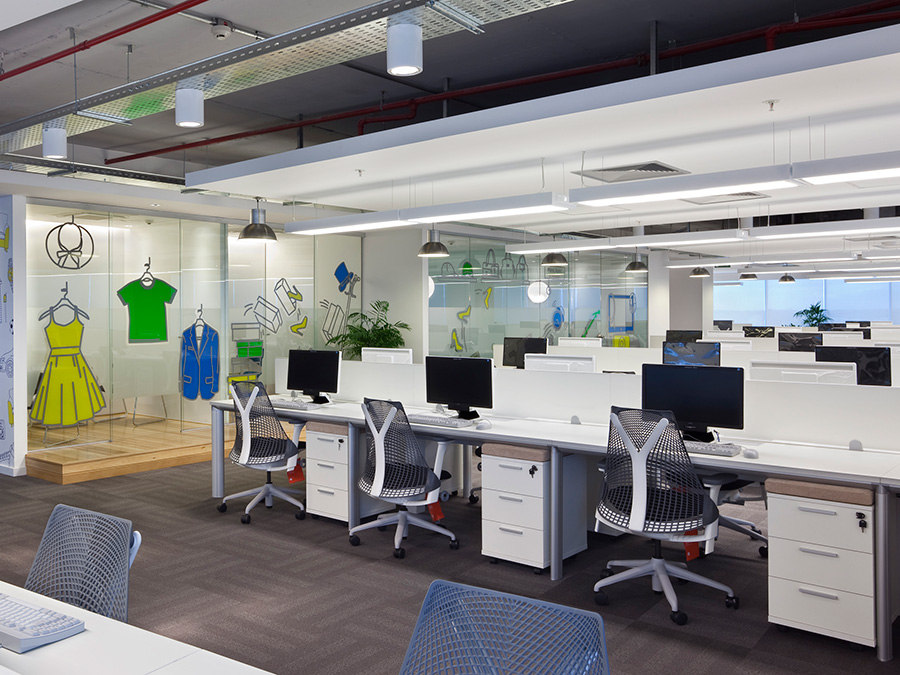
Regarding the materiality of the project, a wide color palette was used seeking to represent and give identity to each of the brands that make up the Navent company. For this, we worked with different tonal ranges, textures and patterns that, in addition, gave the space a playful and scenographic character.

Graphics and branding had a privileged place in the development of these offices, becoming a leading element in many of their spaces.

Area: 2500 sqm

Work period: 100 days

Project: Turnkey

Year: 2021

Industry: Technological

Project Manager: Romina Chalcovich

Designer: Javier Pihn

Colbun Chile Workplace Design and Build by Contract Workplaces

The company’s DNA as a unifying concept – Colbún Chile

Colbún S.A. is a Chilean company dedicated to the generation of electric power with more than 35 years of presence in the country and 25 plants installed. As part of the renovation project of its central offices located in the Las Condes district, Metropolitan Region, the company undertook the intervention and remodeling of its 9 floors together with Contract Workplaces in a four-stage plan.

Colbun Chile Workplace Design and Build by Contract Workplaces

When analyzing the set of the existing plants, we found that they had a common pattern: the workspaces were disincorporated. There were no common areas and of collective use, which made it difficult for the collaborators to meet.

When approaching the new project developed in 6,000 m² and distributed in 9 floors, the five aspects that reflected the DNA of the company were taken into account: integrity, innovation, excellence, collaboration and passion.

The conceptual design revolved around the generation of a common language that could unify the entire project. To this end, three alternatives were created that apply to each floor according to the requirements and character of each one: “Customer Focus”, “Team Focus” and “Collaborative Focus”.

Colbun Chile Workplace Design and Build by Contract Workplaces

Stage 1 focused on the “Collaborative Focus” on floors 14 and 20, where the work teams were located. The general match was based on the unification of the plant through the implementation of a layout in Open Space with the closed offices located on the perimeter, but with a fluid visual connection throughout the entire floor.

In the center of the plant, the collaborative areas (Brainstorming, Informal Meetings and Meeting Box spaces) were located together with the operational area, so that different instances of interaction between collaborators could be generated, be they formal or informal. In order to reinforce the integration of the team, the same type of furniture was defined for all members of the campus. The Work Coffee was also located in the central area, underpinning the intention of strengthening ties and meeting opportunities for teams.

Colbun Chile Workplace Design and Build by Contract Workplaces

Regarding the materiality of the project, a palette of colors and textures with its own character and identity was defined. The use of natural elements such as the texture of the wood together with the presence of a profuse vegetation in all areas, generated a warm and welcoming atmosphere that increased the sense of belonging of the collaborators. The choice of neutral tones in the carpet and the equipment reinforced this idea.

The search for a common imprint and language for the entire project, added to the need for greater integration of the teams, resulted in a wide, interconnected, collaborative and functional workspace. In this way, the new Colbún offices reflect an image consistent with the company’s identity.

Colbun Chile Workplace Design and Build by Contract Workplaces


Area: 1.436 sqm (floors 14° – 20°)

Term of the work: 485 days

Location: Las Condes – Santiago

Design: Contract Workplaces

Type: Turnkey Project

Year: 2020

Country: Chile

Activity: Energy & Mining

Architect Manager: Consuelo Larrea

Conceptual Architect: Celina Barranco

Development Architect: Jorge O’Ryan

Furniture: Giuliani / Cerantola / Contatto

Graphic Design: Camilo González

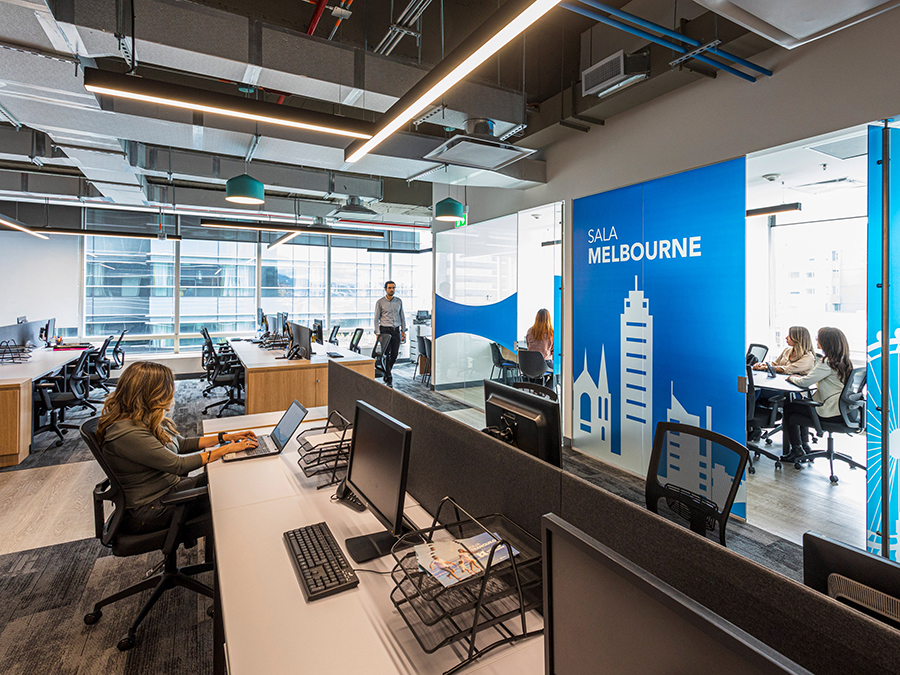
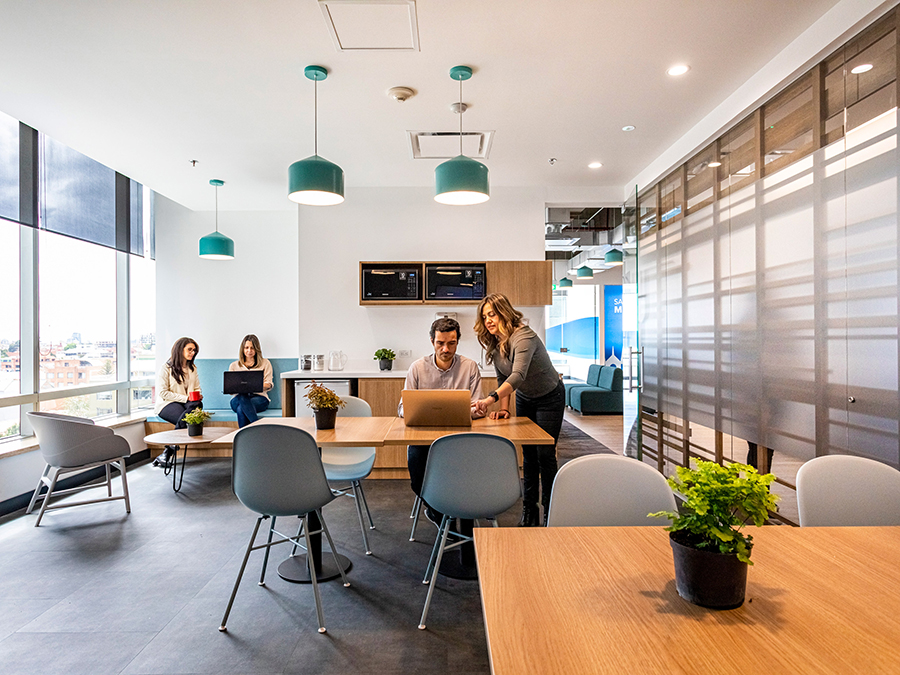
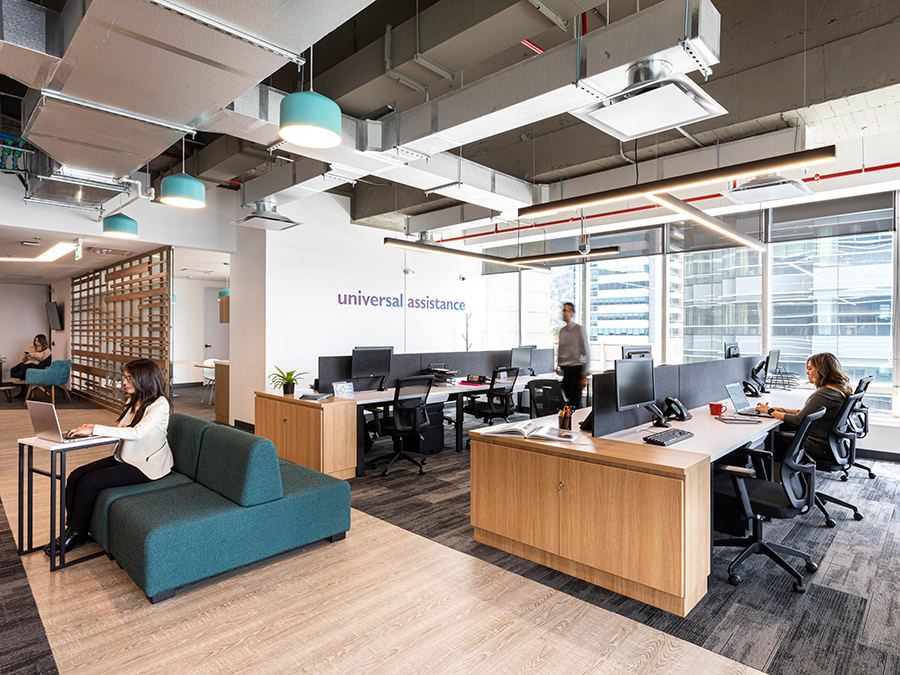
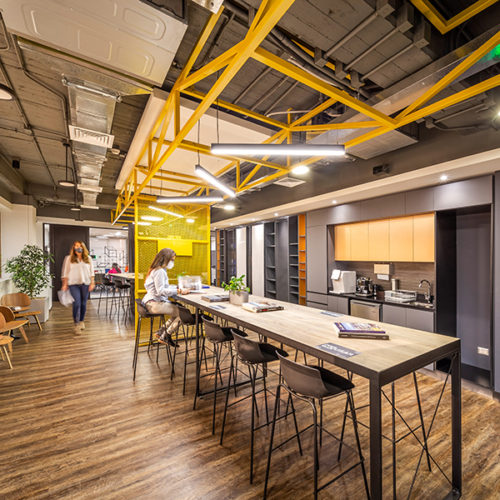
Oficinas modernas de Universal Colombia por Contract Workplaces

The office’s evolution based on the user experience – UTA Colombia

Universal Travel Assistance is a company that has been offering comprehensive assistance services to travelers for more than 40 years, with service centers around the world. As part of the Zurich Insurance Group, it has a staff of more than 3,000 employees distributed in 21 countries.

Diseño de oficinas de Universal Colombia por Contract Workplaces

The project for the company’s new offices in the city of Bogotá was developed on a 254 m² plant, within a business complex made up of class A office towers occupied by large multinational firms, excellent access roads and a wide range of complementary services.

In keeping with the vision of the company – to be the best travel insurance and assistance provider in the world in terms of service and customer recognition – the project concept was conceived from the point of view of user experience with a evolution to an office with a modern sense, that promotes suitability and service based on trust, the avant-garde mindset and security so important in that point of connection and possibilities between people and the world. This concept is already materialized from the access, where the client has his first contact with the company in a wide welcome area, with perspective and friendly.

Oficinas modernas de Universal Colombia por Contract Workplaces

The layout design is organized around a central circulation axis that distributes the different project requirements on both sides. The boardroom and Coffee Point, serving both employees and customers, were strategically located to function independently without the need to traverse the operational area.

For their part, the jobs were organized in Open Plan and have a collaborative work area to favor worker interaction and informal meetings. The closed spaces for the Meeting and Management Room were located on one of the perimeters of the plant and have glazed fronts to favor natural lighting, also allowing natural lighting to enter the open plan, along with an adequate acoustic treatment that helps to maintain privacy and concentration.

Interiores oficinas de Universal Colombia por Contract Workplaces

The image of the project as a whole appeals to a sober, timeless and elegant style. Different resources, textures and tones were combined to generate the necessary emphasis in each of the spaces. While wood helps to materialize the dividing wall of the cafeteria in a simple and effective way without interrupting the contribution of light to the Reception, the ceilings with the exposed facilities and the exposed concrete slab in the operating area contributes to define functional areas.

Within the chosen color palette, corporate blue stands out, intended to highlight the brand image but without saturating it. The furniture, modern and with simple lines, accompanies and complements the choice together with a lighting design that punctually highlights the circulations and helps to delimit the spaces.


Area: 254 sqm

Term of the work: 191 days

Location: Bogota

Project ManagerCarolina Espitia

DesignersSergio Franco, Laura Alvarado

Type: Turnkey Project

Year: 2020

Country: Colombia

Activity: Other Industries & Services

Design: Contract Workplaces

Espacio de trabajo de Sigdo Koppers por Contract Workplaces

The integration as a premise – Sigdo Koppers Chile

The Chilean company Sigdo Koppers was looking for a change to its offices –distributed on 9 floors of 580 sqm each in the same building– in order to adapt to the new times, improve its image and consolidate its position as a market leader. With these premises in mind, Contract Workplaces faced the project’s challenge, which consisted in generating collaborative spaces (that did not exist until the moment), minimizing private offices and setting an open-plan layout to favor the visibility and interaction of collaborators. 

Arquitectura de oficinas para Sigdo Koppers por Contract Workplaces

The process began with a Workplace Strategy consultancy in which a deep analysis of the organization was carried out to understand its DNA, the use of space and the expectations regarding change. Through this process, it was necessary to detect the relationships between the different areas and the best location for managers and their teams. Strategies to improve the integration of all sectors were also investigated by approaching the areas that worked more closely and that at the moment, were separated into different floors. It should be noted that the first stage of the habilitation only contemplated the intervention of floors 1, 6 and 7.

The dining area was located on the first floor. This plant had a large wooded garden that was in disuse, so its value was enhanced by creating a terrace that is integrated as an outdoor workspace.

The sixth floor, organized in an open plan, was destined to the engineering area. Here, bench-type workstations with a larger surface area were arranged so that collaborators could have more space to locate several monitors and comfortably display plans and documentation. On the other hand, the seventh floor kept the private offices and the boardroom, so only a small intervention was made to update the spaces and their proportions.

Espacio de trabajo de Sigdo Koppers por Contract Workplaces

Given the dimensions of the floors, the design contemplates the location of all workstations and meeting areas on the perimeter to make the most of natural lighting. The glass enclosures of the private offices and meeting rooms collaborate to create a diaphanous and transparent atmosphere.

Regarding the image of the offices, the key concepts that guided the design process – display, connect and transmit – were materialized in noble elements such as stone, copper, concrete, iron and wood, matching with a sober color palette with some vibrant touches. And to reinforce this image, details that refer to the mission and trajectory of the company were also included, such as the crane hanging from the ceiling of the collaborative area.

Nuevas oficinas para Sigdo Koppers por Contract Workplaces

The project also had technological support. Room reservation systems were implemented at the entrance to each meeting area, and also videoconferencing equipment and interactive flip-type screens, to generate information that could then be sent to users via Wi-Fi.

Finally, in order to facilitate the cultural change that this transformation meant, a Change Management process that engaged the entire organization was put into practice. This resource was sought to accompany each and every one of the collaborators in the change process, managing their expectations and helping them to integrate the new workspace into the new work dynamics.

Diseño de oficinas para Sigdo Koppers por Contract Workplaces


Area: 4165 sqm

Term of the work: 450 days

Location: Las Condes, Santiago de Chile

Type: Turnkey Project

Year: 2020

Country: Chile

Activity: Energy & Mining

Project Manager: Nora Sepulveda

Designer: David Oyarzo

Design: Contract Workplaces

Oficinas modernas de Contract Workplaces Uruguay

10th Anniversary of Contract Workplaces Uruguay

In 1996 Contract Workplaces was founded in Argentina, with the spirit of becoming the only company specialized in the design and construction of workspaces in the region. In 2011, and as part of its regional expansion plan, it expanded its operations to Uruguay, settling in the country’s capital. Today the company has two of its own offices in Montevideo: one in Tower 4 of the World Trade Center and the other in the WTC Free Zone.

Oficinas modernas de Contract Workplaces Uruguay

Paradoxically for a company in this field, the beginnings of the operation were in the garage of an office building! “Our initial growth was so fast that we had to incorporate new collaborators and, between the uncertainty of all kick-offs and the immediate lack of space, we got that place and a few pieces of furniture on loan. After a while, we were able to rent an office in the same building, get out of the ground, and design and build our first office,” says architect Daniel Flom, founding partner and Executive Director of Contract Workplaces Uruguay.

A glance of his work in Uruguay

The first two commissions in Uruguay were for leading multinational companies in their fields: agribusiness and coworking. Those first successful projects were followed by many more. “From our beginnings, one of our main differentials has been to fulfill the commitments assumed with our clients: works on time, on budget and with the agreed quality. This allowed us to quickly generate close ties with the organizations we work with, who recommend us and request our services again”, adds Rafael Flom, economist and also founding partner and Director of the company.

The wide coverage of services and specialization in the latest trends in workspaces were the pillars that led Contract Workplaces to position itself as leaders in corporate architecture in Latin America, and Uruguay is no exception. “Other keys to success are undoubtedly the determination of a high-performance team, the trust of our customers and that of our suppliers. Architecture and construction in general, but work at Contract Workplaces in particular, are strongly teamwork. Achievements and failures are always shared, ”adds architect Flom.

Today, it has 10 years of experience in the country and more than 200 works carried out for various industries that exceed 60,000 square meters designed and built, positively impacting the work experience of more than 10,000 people. Some of the projects executed in recent years were for clients such as WPP, Mercado Libre, Oracle, Fucac, Starcenter, Deloitte, World Trade Center, Bayer, Mapfre, Pfizer, among others.

A look into the future of work

We are in the midst of a huge transformation in the way we work. The COVID-19 pandemic has not only accelerated trends that were emerging but would have taken years to reach mass adoption; people’s vision of the future has also changed. So what is the future of the office in the new post-pandemic normal?

Many analysts believe that the world of work will change, but that, in essence, it will not be that different from how it was before the pandemic; human beings are social beings, we need contact and social interaction. In this sense, the office can – and must – become a positive experience and a desirable destination for workers. The work environment will strengthen its role as a management tool to create culture, generate a sense of belonging and purpose. It will be the necessary framework for innovation, serendipity, learning and the creation of bonds of trust between the members of an organization.

Oficinas modernas de Bayer Uruguay por Contract Workplaces

Traditionally, the office was thought of as a place to group people behind a desk within a fixed schedule, where experiences used to happen without much planning or control but as a result of everyday activities. Today, by contrast, the economy and technology have transformed workers into a workforce of mobile consumers, so the workplace experience is becoming a vitally important issue that deserves to be designed and managed with much detail. All elements of the environment (physical, virtual and social) are carefully articulated to inspire and engage employees. Each interaction is painstakingly designed to create deep emotional connections.

Also, models such as ABW (activity-based work) acquire greater value due to their flexibility and great adaptability to the needs of a world that will continue to change more and more rapidly. This will allow the offices to function as hubs for face-to-face collaboration while sustaining digital cooperation. Technology will play a central role in blurring the boundaries between the physical and virtual world and in preserving corporate culture.

“Faced with this new reality, the commitment of Contract Workplaces – more than ever – is to accompany clients in the process of conceiving and defining their new work models, probably hybrids, and the activities that will be supported there,” says Daniel Flom.

Diseño de oficinas de Mercado Libre Uruguay por Contract Workplaces

Contract Workplaces affirms its local positioning and is committed to continuing to create innovative work experiences that promote the development of companies and their collaborators, enhancing their talent.

An inclusive and homely experience in the work environment

In recent years, the workspace has undergone major transformations and it is no coincidence that technology companies are at the forefront of new trends.

The promoted model by these companies –based on the design of agile spaces, capable of stimulating collaboration and creativity– was also replicated with very good results in companies of other sectors and today it is almost a standard.

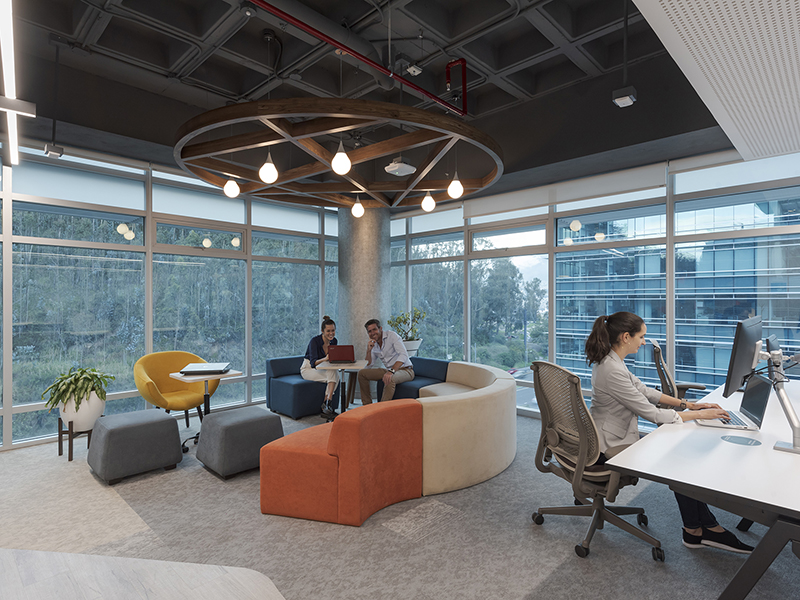
Following this same line, we approached the project of one of themost important technology firms in the world in the city of Quito. The design was developed on a 435 sqm plant located in the EkoPark complex, a well-known international corporate center in the region.

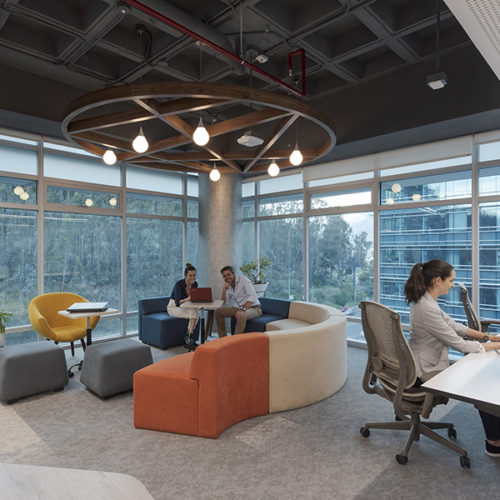
The project was conceptualized from an activity-based approach (Activity Based Working) and part of a layout that includes multiple environments and typologies in order to support the variety of tasks and work dynamics that are developed during the day. Instead of forcing people to work in a single environment, anchored to their desk, this model allows each one to choose the most suitable place to carry out their task. In this way, people can be more productive and can collaborate better both inside and outside the office.

The design was structured around a core that contains service areas and allows a better circulation, while dividing the plant into two large sectors: Client Space and Employee Space.

The Client Space was dedicated to customer care and training. It has its own lobby and reception, a Coffee Point, an informal meeting room, two formal meeting rooms and a multipurpose room that can also be used for trainings.

The Employee Space, for its part, was destined for the exclusive use of employees. Given that the company had a strong culture of flexible work even before the pandemic (50% of its payroll works remotely and alternately), the layout was organized in an Open Space scheme where views and natural light are privileged. There, ten unassigned workstations, a lounge for nine people and eight other alternative positions were installed. It also has a kitchenette, Phone Boots, Meeting Boxes and the Copy Point.

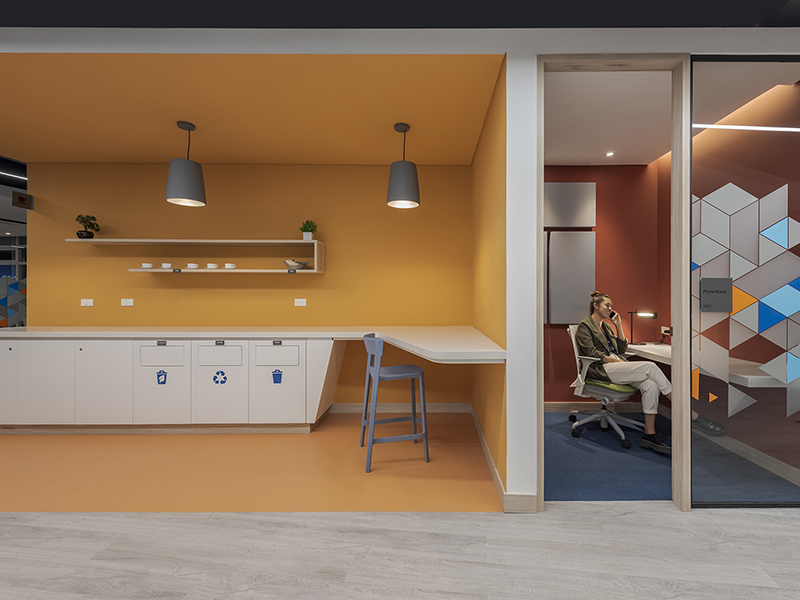
The acoustics of the Phone Boots and the meeting and training rooms were carefully planned with special partitions and acoustic panels which, at the same time, work as decorative elements.

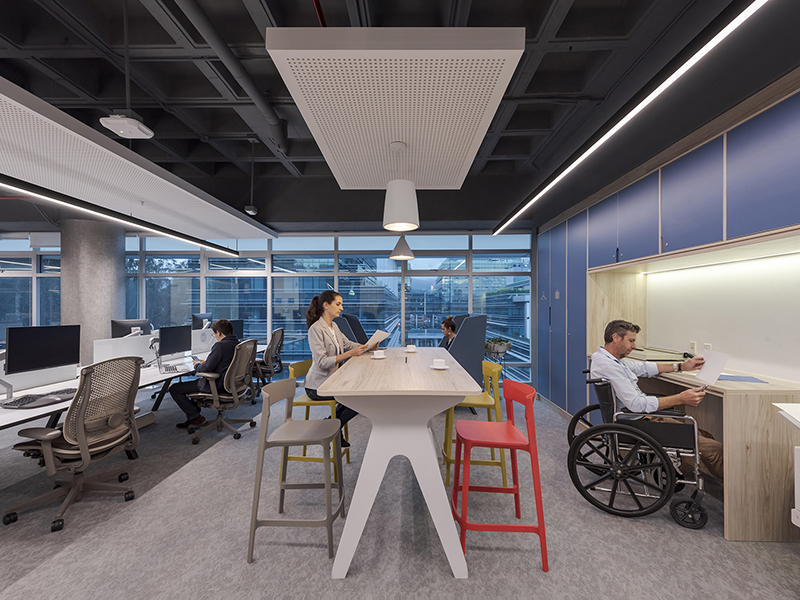
All these spaces were designed to allow a suitable development of the activities carried out by people, collaborators and clients, regardless of their characteristics and personal conditions. The easy access to the office was very important for the company. Strategies with inclusive criteria were implemented, such as Braille signage, bathrooms and circulations suitable for people with reduced capacities, automatic taps, variable table heights and automated doors.

In order to create a warm, welcoming and homely image, a soft tones palette was chosen, beyond the use of corporate colors. For this, we worked with different ranges of orange and blue. Decorative elements such as textiles, plants and accessories were also incorporated. They all contributed to generate a “homely” effect capable of combining the brand’s avant-garde stamp with the close and familiar spirit that lives in its work teams.


Area: 430 sqm

Term of the work: 75 days

Location: Quito

Type: Turnkey Project

Year: 2020

Country: Ecuador

Activity: Technology Industry

Designer in charge: Mario Molina

Design: Contract Workplaces

Agile Working

Agile working is not a novelty. Large companies related with the technology sector, such as Facebook and Google, have been implementing it for several years. It is a strategy that is not limited to flexible work or teleworking, but it is also focused on achieving goals in an efficient way with maximum flexibility and minimum restrictions, oriented towards results and innovation, and people-centred. The workspace of an agile organisation should support this strategy and offer an environment suitable to adapt quickly to the changing needs of both collaborators and the organisation. But since the purpose of the office is to optimise productivity to achieve better results, each company must find the formula that best fits its objectives. In today’s changing world, agile working is a resource that no organisation can afford to ignore.

Today, the pace of the change driven both by the advancing technology as well as by cultural and economic transformations is getting faster than ever. Even the nature of work itself is changing and will keep on changing, especially with the development of automation processes and AI, since according to current estimates, 75% of today’s office work is based on data processing.

In this unpredictable and volatile context, companies need to continuously evolve to remain competitive, and many have already adopted useful strategies to be able to rapidly reshape their own businesses.

However, the concept of agile working is not always well understood. The terms “agile” and “flexible” are frequently used interchangeably, even though they have different meanings; performing the same work in the same manner, but from different locations is not agile, it is merely flexible work.

Agile working is a way of working that makes the most out of new technologies and new work environments. People can perform their tasks at any moment and from any place, but they also do their job autonomously, focusing on performance and results.

To take advantage of the opportunities created by implementing this strategy, the key lies in adopting an agile organisational culture, getting employees to commit and empower them in a relationship based on trust and responsibility. All the while, without forgetting that the workspace should offer an environment that supports this practice and that can be quickly adapted to the changing needs of both the collaborators and the organisation.

What is Agile Working?

Based on what is known as the “Agile Manifesto”—which came into being in the IT industry as a software development method—this way of working can be applied at any type of organisations.

The concept of agile working is based on the idea that work is an activity we do, not a place where we go. It favours flexibility by allowing people to work in the way that best fits their own needs without the traditional limitations regarding where, how and when tasks need to be completed. Collaborator autonomy and empowerment are key elements in this strategy.

To this end, we need to use the available technology along with a range of IT resources which allow us to work in new and different ways, to better satisfy the needs of our clients, reduce costs, increase productivity and improve sustainability. By eliminating all these superfluous barriers, agile working allows us to work more efficiently.

But this can only be achieved with high levels of trust and a culture based on performance and accomplishment of goals. This involves having new management skills which allow teams to work more effectively, communicate better and maintain high levels of commitment and performance.

Unlike flexible work, agile working is mainly focused on the benefit of the business. Work processes and practices are based more on the tasks than on how, when or where they are completed. This means that collaborators get to work wherever they think they will be more efficient: at the office, from home, at a hot desk, at the clients’ office or from any other place that helps them maximize their needs in order to accomplish their goals.

Some of the factors that have favoured an evolution towards agile working are the following:

  • Technology

New technologies have created multiple ways of connecting with colleagues and clients, of collaborating and sharing knowledge and ideas quickly and effectively anywhere and anytime.

  • Increasing demand for a balance between work and private life

The new generations that are joining the labour market attach great importance to the balance between work and private life. They want a challenging job, but they also prioritise having the necessary flexibility to be able to complete it in their own terms.

  • Cost and profitability

In large cities, space is an increasingly scarcer and more expensive commodity. The structure of the traditional office is costly: it has been proven that it has a low occupancy rate and that many desks remain vacant during most of the working day. Agile working can help to reduce the necessary space and thus optimize operations and improve profitability.

  • Sustainability

In cities collapsed by car traffic, avoiding daily commutes saves transportation times and simultaneously saves energy in transportation and reduces environmental pollution.


Some Principles of the Agile Manifesto
The highest priority is to satisfy the customer.
We need to harness change.
We need to build projects around motivated individuals.
The most efficient and effective method of conveying information is face-to-face conversation.
Agile processes promote sustainable development.
Continuous attention to technical excellence and good design enhances agility.
Simplicity is essential.
We need to work with self-organizing teams.
We need to reflect on how to become more effective.


Source: https://agilemanifesto.org/principles.html


The Benefits and Limits of Agile Working

Implementing an agile working strategy can benefit companies in several aspects that range from a lower employee turnover to higher productivity and lower operating costs. These benefits, in turn, can result in a more solid organisational culture and in better results.

  • Increased productivity and efficiency: By giving more power of decision, flexibility and autonomy to work teams, responsiveness, efficacy and productivity increase.
  • More innovation: Teams that can make decisions on their own working conditions are usually more motivated and more creative.
  • Higher commitment: given that employees have more autonomy, trust and power of decision, they feel more responsible, which results in a higher level of commitment.
  • Higher job satisfaction: having a more balanced work-private life relation, along with the empowerment and autonomy needed to accomplish pre-established goals, creates higher job satisfaction.
  • Greater talent retention: working conditions offered through agile working helps retain talented employees longer.
  • Lower operational costs: Agile workspaces make a more efficient use of the space available. Since there are practically no appointed workstations, the use of workspaces is optimised, and this results in lower operational costs.
  • Guaranteed business continuity: the possibility of working remotely reduces interruptions due to bad weather, seasonal illnesses, traffic, potential natural disasters, etc. Thus, normal business activity is not compromised.

However, we should not underestimate the limitations of this strategy. Many companies are faced with the reality that the biggest obstacle when it comes to implementing agile working is organisational culture. It is not enough to equip offices with state-of-the-art technology or invest in costly renovations if there is no culture to provide autonomy and empowerment to collaborators, to encourage individual responsibility and to create bonds of trust. Only after a solid agile culture is built can the benefits of agile working truly be reaped. And this change also requires the development of new leadership skills on the part of the management.

Characteristics of an Agile Workplace

In order to accomplish the goals set by agile working, the design of the physical space is a crucial element. The workspace should bolster and support the needs for flexibility, efficiency, productivity and collaboration, by providing adequate spaces to hold all kinds of activities: quiet areas for individual work, as well as open and shared spaces for the development of collaborative projects. Furthermore, the design of the work environment should allow the resetting of spaces based on the different needs of collaborators throughout the day.

Traditionally, the focus to organize the workplace was to appoint a desk or office to each person and group people by department. But this type of setting reflects hierarchy and status, not role and function. Even more, this distribution is pointless since most people no longer spend their days behind a desk performing repetitive tasks. Collaborative work is on the rise, and people are spending more time working with colleagues or clients. This suggests that the spaces demanded by people to perform different kinds of jobs are changing. Agile workplaces focus on an efficient use of space and offer a wide array of options that provide the necessary resources, when and how they are needed.

  • Layout: an open plan setting favours communication and collaboration, while it allows for an optimal use of space.
  • Breakout areas: it is all about offering multifunctional spaces where people can chat, collaborate, relax, eat and organize meetings with their work teams.
  • Quiet areas: agile workplaces do not usually have private offices, which is why quiet areas allow employees to perform tasks that require concentration without distractions.
  • Shared desks: they are ideal for employees who are intermittently at the office. These areas are especially designed to complete tasks quickly.
  • Technological equipment: it plays a key role in the agile working strategy, as it makes it possible for employees to move around both inside and outside the office. It is not about connecting desks, it is about connecting people.
  • IT resources: IT resources used to implement and manage an agile working strategy can vary, from Cloud services, video communication platforms and free resources such as Skype and FaceTime for daily exchanges, to electronic access cards and virtual private networks, to name a few.

Conclusions

Agile working is a new way of working that is based on giving autonomy, trust and flexibility to the people, along with the technology and the tools needed to complete their tasks in the way they consider most effective and suitable. This means that collaborators get to work in an office, from home, at a hot desk, at the clients’ office or from any other place that helps them maximize their chances of accomplishing their goals, replacing a culture based on office jobs for result management.

An agile organisation will require a workspace suitable to sustain and support the needs for flexibility, efficiency, productivity and collaboration by providing adequate spaces to complete all kinds of activities.

However, this strategy is not a single solution that works for everybody. In today’s quickly-evolving labour market, each company needs to find a formula that best fits its goals. In today’s changing world, agile working is a resource that no organisation can afford to ignore.


SOURCE: FM & WORKPLACES

Gamification: Heads or Tails

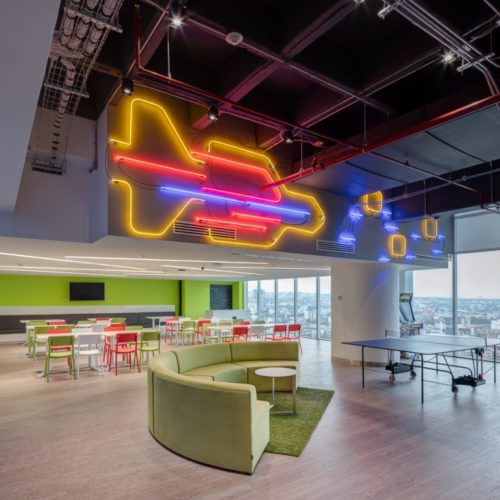
Technological advancement and the arrival of new generations into the workforce have resulted in major changes in the corporate world. Suddenly old offices crammed with dull, uniform cubicles gave way to open, informal and laid-back spaces filled with bars, playrooms, large sofas and vibrant colours.   Nonetheless, much like the open office and many other trends, the fun-and-games formula, nowadays considered the standard, is far from infallible or universally applicable. If companies want this strategy to succeed, it’s not enough to create workplaces which support their working culture and processes.  They must also recognize that, when fun becomes an obligation, responses can vary as wildly as human beings are diverse: from acceptance and excitement to indifference and discomfort.

A few decades ago, an American psychiatrist named Stuart Brown began a study about the psychological profile of young American murderers. As a result of his investigation, Brown discovered that these individuals had something in common: a life deprived of play.   Thus, he realised that prolonged play deprivation can have devastating consequences on someone’s general well-being and skill development.

The urge to play is inherent to humans —though not exclusive, since many animal behaviours are partly based on play—, and it has been favoured and refined through evolution for over a hundred million years. Play facilitates learning of social, bodily and emotional regulation; it improves empathy and cooperation; it provides experiences which benefit our ability to recover; it decreases stress and develops curiosity and mutual trust.  Play helps to rehearse and improvise behaviours and reactions more effectively, therefore preparing us for the unexpected in an unpredictable environment.

Dutch historian and anthropologist Johan Huizinga had already proposed this view of the importance of play in the early twentieth century.   Huizinga –who claimed our species would be better defined as homo ludens than homo sapiens– suggested that play is an essential component in the development of human culture.

Studies conducted by the University of Gloucestershire indicate that playing is a way of experiencing sensations and emotions —through interaction with our social and physical environment— which gives the player a sense of control.  This affects both the brain’s structural development and genetic expression, and further motivates us to play and seek physical and emotional pleasure in new and flexible ways.

This neuroscientific approach reveals that all types of mammals possess a brain system that allows play.  Play is a powerful source of motivation and gratification which stimulates the brain’s reward centres, which respond by releasing dopamine and oxytocin, two neurotransmitters in charge of mediating pleasurable sensations.

These insights have not gone unnoticed in the corporate world. Companies have begun to see the integration of play areas and recreation into the workplace as a solution to some of the most common issues faced by modern organisations: high levels of stress, a weaker sense of community and loyalty, and constant staff turnover.

What Is Gamification?

The opposite of play is not work — the opposite of play is depression. Stuart Brown.

With a view to transforming work into a positive experience, many companies are currently developing practices and initiatives which aim to improve collaborators’ overall disposition.  One such practice is gamification, defined  as a strategy which introduces elements of play into the workplace in order to improve employees’ emotional state and direct them in the accomplishment of particular goals.

This trend, born in the 1990s as a novelty exclusive to technological and digital-media start-ups, and which aimed to make the young workers of the new generations feel valued, to gain their loyalty and retain them as employees, is now the standard in cutting-edge companies.    Cafeterias, ping-pong and table football, and corporate celebrations and retreats are now must-have features of the modern office.

Gamification can include all types of play, from traditional board games, to outdoor games, role-playing, competitions and even modern videogames.  This stems from the view that human beings are competitive, playful creatures even in adulthood.  The huge popularity of sports is a testament to the basis of this claim.

Consequently, gamification is consolidating its position as an extremely valuable alternative.  So much so that Gartner Consulting estimates that over 50% of organisations interested in innovation will introduce gamification into their business plan in the next few years.

Benefits

As we have seen, play stimulates the reward mechanisms in the brain, generating a sense of gratification and stimulating both learning and the repetition of positive behaviour. For this reason, incorporating a space for play and recreation into the office can result in several benefits.

Trends indicate that, beyond financial retribution, young workers value having fun at work.  In fact, millennial- and post-millennial employees believe fun at the workplace to be a requirement, rather than a bonus.  Hence, companies have begun to accept the need to create a playful, creative working environment if they want to recruit and retain a talented workforce.

With a well-planned and well-managed recreation scheme which takes into account employees’ interests, tastes and differences in gender, age, and so on, playful activities can become a tool to combat stress and increase learning and productivity, as well as reduce absenteeism and improve mental and physical health. Play helps to build trust and improve communication, as well as fostering creativity, participation and a shared culture where all collaborators have the opportunity to meet and interact in an informal environment.

In short, playful activities in the workplace have a positive influence on employees’ performance and can contribute to high levels of commitment.  These activities are key for employee bonding and the development of skills like leadership and communication.

Nevertheless, it must be said that, rather than making work more satisfying and meaningful, play provides a “game layer” which changes the working experience without redesigning the very nature of the work itself.

What Happens When Fun Is Mandatory?

As we have seen, games and recreation in the workplace have a positive impact on staff.  Yet gamification, like other management initiatives, can bring about unwanted results.

According to Johan Huizinga’s outline, play must be voluntary and disconnected from material interest, it must be limited in space and time, and must possess a system of rules.  However, when gamification strategies are implemented in companies, voluntary participation often becomes secondary or goes completely unnoticed.  Even though the goal of playful activities is to improve working conditions, it must be remembered that gamification does not comply with the requirements according to which play must be free, voluntary and disconnected from material interest.

Mollick and Rothbard, in turn, claim that games are usually fun precisely thanks to their elements of spontaneity, surprise and, often, subversion of the existing order of things.  Nonetheless, with gamification, spontaneous activities, such as informal socialising between workers, can become planned management initiatives, like corporate celebrations or retreats, thus giving rise to the introduction of a new notion, that of “mandatory fun.”

In order to figure out the mandatory-fun paradox and understand which play-related initiatives can improve workers’ emotional state and consequently their performance, it’s crucial to obtain their express, voluntary consent; otherwise they will see such initiatives as imposed by management.

A major difference between spontaneous play and gamification is that the former involves games initiated by workers themselves, whereas with the latter, games are imposed vertically from management and are designed to reinforce management goals.

If employees are compelled to participate in a game, competition, tournament, celebration or any other corporate-mandated “fun” activity, responses are bound to be as varied as human beings are diverse: some will accept it, some will ignore it and some will feel uncomfortable or upset.  Therefore, the diversity of the workforce in terms of personality (introverted or extroverted), age, gender, interests, and so on, must not be overlooked.

Conclusions

Play is socially, emotionally, cognitively and physiologically key for many animals, including human beings.

For adults, play can be a creative way of solving problems and releasing emotional tension, as well as stimulating flexibility and the ability to face stressful situations more resourcefully.

Companies which adopt gamification in the workplace do more than satisfy their employees’ physical and psychological needs:  they also improve staff recruitment and retention, increase productivity, reduce absenteeism rates and boast a happier, more relaxed and committed workforce.

While it is true that implementing playful activities to motivate workers improves the working environment and increases productivity, the role of consent as a relevant psychological response must not be overlooked. When participating in the fun becomes a mandatory requirement, employees may feel uncomfortable due to the impossibility of managing their task schedule or choosing how and with whom to spend their free time. Knowing that other options are available is healthier and can reduce reluctant employees’ opposition.


SOURCE: FM & WORKPLACES

Dupont Colombia

DuPont Offices – Bogotá

Contract Workplaces transformed DuPont‘s existing offices into a collaborative workspace located in Bogotá, Colombia.

The construction work at DuPont Colombia posed a great challenge for Contract Workplaces, as it involved redesigning a space that had so far reflected a 100% traditional and conservative work model, with many closed offices and a strong distinction of hierarchical positions. Furthermore, the space did not include collaborative areas devoted to interaction and relaxation.

Therefore, in these new offices, a dynamic and open design was presented, generating areas for group collaboration, as well as private work spaces intended for those tasks requiring more concentration. The 1,125 m2 floor space now accommodates 102 workstations, two hot desks for six persons each, grandstands for trainings or multimedia meetings with other branches, four conventional meeting rooms automated with state-of-the-art videoconference and projection technologies, a relaxation room which can also be used to hold recreational activities, a medical office, a breastfeeding room and the canteen, which can also be used for informal meetings.

The new design thus achieved the perfect transition from a conservative work model to one adapted to current working trends with an elegant, modern and timeless design. This renovation, in turn, reflects the corporate image of a company which, after 216 years of history, is transforming to adapt to the new times.


SOURCE: Office Snapshots

Construcción-de-oficinas-para-Chubb-Ecuador--casos-destacados

Chubb Offices – Quito

Contract Workplaces designed the offices for insurance company, Chubb, located in Quito, Ecuador.

The client wanted to encourage spontaneous communication among collaborators and teamwork. It also focused on highlighting the colors and corporate image of the company.

The most characteristic features of the design are the principle of transparency and open communication, open work spaces, collaborative areas and uniform access to natural light. Both public and private spaces are connected through well-marked and defined circulation.

Special attention was paid to the environmental quality of the work spaces, eliminating barriers and closed offices. Great importance is also given to the external environment and contact with nature. A terrace was incorporated as a work area with furniture and golf. Technologically, we look for an important link with the environment for mechanical systems of air renewal and lighting control.


SOURCE: Office Snapshots