Agile Working

Agile working is not a novelty. Large companies related with the technology sector, such as Facebook and Google, have been implementing it for several years. It is a strategy that is not limited to flexible work or teleworking, but it is also focused on achieving goals in an efficient way with maximum flexibility and minimum restrictions, oriented towards results and innovation, and people-centred. The workspace of an agile organisation should support this strategy and offer an environment suitable to adapt quickly to the changing needs of both collaborators and the organisation. But since the purpose of the office is to optimise productivity to achieve better results, each company must find the formula that best fits its objectives. In today’s changing world, agile working is a resource that no organisation can afford to ignore.

Today, the pace of the change driven both by the advancing technology as well as by cultural and economic transformations is getting faster than ever. Even the nature of work itself is changing and will keep on changing, especially with the development of automation processes and AI, since according to current estimates, 75% of today’s office work is based on data processing.

In this unpredictable and volatile context, companies need to continuously evolve to remain competitive, and many have already adopted useful strategies to be able to rapidly reshape their own businesses.

However, the concept of agile working is not always well understood. The terms “agile” and “flexible” are frequently used interchangeably, even though they have different meanings; performing the same work in the same manner, but from different locations is not agile, it is merely flexible work.

Agile working is a way of working that makes the most out of new technologies and new work environments. People can perform their tasks at any moment and from any place, but they also do their job autonomously, focusing on performance and results.

To take advantage of the opportunities created by implementing this strategy, the key lies in adopting an agile organisational culture, getting employees to commit and empower them in a relationship based on trust and responsibility. All the while, without forgetting that the workspace should offer an environment that supports this practice and that can be quickly adapted to the changing needs of both the collaborators and the organisation.

What is Agile Working?

Based on what is known as the “Agile Manifesto”—which came into being in the IT industry as a software development method—this way of working can be applied at any type of organisations.

The concept of agile working is based on the idea that work is an activity we do, not a place where we go. It favours flexibility by allowing people to work in the way that best fits their own needs without the traditional limitations regarding where, how and when tasks need to be completed. Collaborator autonomy and empowerment are key elements in this strategy.

To this end, we need to use the available technology along with a range of IT resources which allow us to work in new and different ways, to better satisfy the needs of our clients, reduce costs, increase productivity and improve sustainability. By eliminating all these superfluous barriers, agile working allows us to work more efficiently.

But this can only be achieved with high levels of trust and a culture based on performance and accomplishment of goals. This involves having new management skills which allow teams to work more effectively, communicate better and maintain high levels of commitment and performance.

Unlike flexible work, agile working is mainly focused on the benefit of the business. Work processes and practices are based more on the tasks than on how, when or where they are completed. This means that collaborators get to work wherever they think they will be more efficient: at the office, from home, at a hot desk, at the clients’ office or from any other place that helps them maximize their needs in order to accomplish their goals.

Some of the factors that have favoured an evolution towards agile working are the following:

  • Technology

New technologies have created multiple ways of connecting with colleagues and clients, of collaborating and sharing knowledge and ideas quickly and effectively anywhere and anytime.

  • Increasing demand for a balance between work and private life

The new generations that are joining the labour market attach great importance to the balance between work and private life. They want a challenging job, but they also prioritise having the necessary flexibility to be able to complete it in their own terms.

  • Cost and profitability

In large cities, space is an increasingly scarcer and more expensive commodity. The structure of the traditional office is costly: it has been proven that it has a low occupancy rate and that many desks remain vacant during most of the working day. Agile working can help to reduce the necessary space and thus optimize operations and improve profitability.

  • Sustainability

In cities collapsed by car traffic, avoiding daily commutes saves transportation times and simultaneously saves energy in transportation and reduces environmental pollution.


Some Principles of the Agile Manifesto
The highest priority is to satisfy the customer.
We need to harness change.
We need to build projects around motivated individuals.
The most efficient and effective method of conveying information is face-to-face conversation.
Agile processes promote sustainable development.
Continuous attention to technical excellence and good design enhances agility.
Simplicity is essential.
We need to work with self-organizing teams.
We need to reflect on how to become more effective.


Source: https://agilemanifesto.org/principles.html


The Benefits and Limits of Agile Working

Implementing an agile working strategy can benefit companies in several aspects that range from a lower employee turnover to higher productivity and lower operating costs. These benefits, in turn, can result in a more solid organisational culture and in better results.

  • Increased productivity and efficiency: By giving more power of decision, flexibility and autonomy to work teams, responsiveness, efficacy and productivity increase.
  • More innovation: Teams that can make decisions on their own working conditions are usually more motivated and more creative.
  • Higher commitment: given that employees have more autonomy, trust and power of decision, they feel more responsible, which results in a higher level of commitment.
  • Higher job satisfaction: having a more balanced work-private life relation, along with the empowerment and autonomy needed to accomplish pre-established goals, creates higher job satisfaction.
  • Greater talent retention: working conditions offered through agile working helps retain talented employees longer.
  • Lower operational costs: Agile workspaces make a more efficient use of the space available. Since there are practically no appointed workstations, the use of workspaces is optimised, and this results in lower operational costs.
  • Guaranteed business continuity: the possibility of working remotely reduces interruptions due to bad weather, seasonal illnesses, traffic, potential natural disasters, etc. Thus, normal business activity is not compromised.

However, we should not underestimate the limitations of this strategy. Many companies are faced with the reality that the biggest obstacle when it comes to implementing agile working is organisational culture. It is not enough to equip offices with state-of-the-art technology or invest in costly renovations if there is no culture to provide autonomy and empowerment to collaborators, to encourage individual responsibility and to create bonds of trust. Only after a solid agile culture is built can the benefits of agile working truly be reaped. And this change also requires the development of new leadership skills on the part of the management.

Characteristics of an Agile Workplace

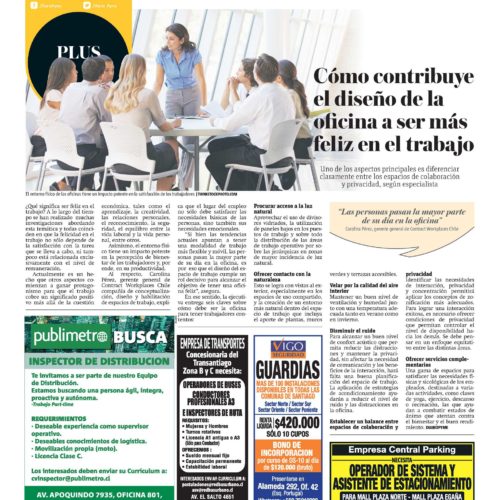
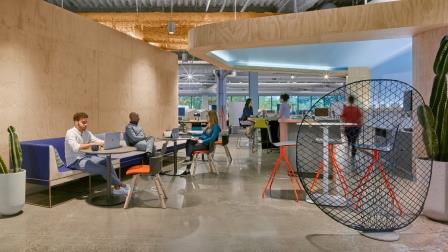
In order to accomplish the goals set by agile working, the design of the physical space is a crucial element. The workspace should bolster and support the needs for flexibility, efficiency, productivity and collaboration, by providing adequate spaces to hold all kinds of activities: quiet areas for individual work, as well as open and shared spaces for the development of collaborative projects. Furthermore, the design of the work environment should allow the resetting of spaces based on the different needs of collaborators throughout the day.

Traditionally, the focus to organize the workplace was to appoint a desk or office to each person and group people by department. But this type of setting reflects hierarchy and status, not role and function. Even more, this distribution is pointless since most people no longer spend their days behind a desk performing repetitive tasks. Collaborative work is on the rise, and people are spending more time working with colleagues or clients. This suggests that the spaces demanded by people to perform different kinds of jobs are changing. Agile workplaces focus on an efficient use of space and offer a wide array of options that provide the necessary resources, when and how they are needed.

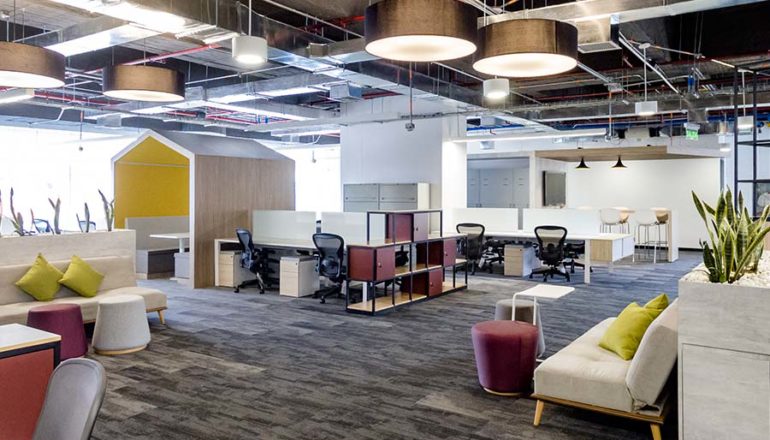
  • Layout: an open plan setting favours communication and collaboration, while it allows for an optimal use of space.
  • Breakout areas: it is all about offering multifunctional spaces where people can chat, collaborate, relax, eat and organize meetings with their work teams.
  • Quiet areas: agile workplaces do not usually have private offices, which is why quiet areas allow employees to perform tasks that require concentration without distractions.
  • Shared desks: they are ideal for employees who are intermittently at the office. These areas are especially designed to complete tasks quickly.
  • Technological equipment: it plays a key role in the agile working strategy, as it makes it possible for employees to move around both inside and outside the office. It is not about connecting desks, it is about connecting people.
  • IT resources: IT resources used to implement and manage an agile working strategy can vary, from Cloud services, video communication platforms and free resources such as Skype and FaceTime for daily exchanges, to electronic access cards and virtual private networks, to name a few.

Conclusions

Agile working is a new way of working that is based on giving autonomy, trust and flexibility to the people, along with the technology and the tools needed to complete their tasks in the way they consider most effective and suitable. This means that collaborators get to work in an office, from home, at a hot desk, at the clients’ office or from any other place that helps them maximize their chances of accomplishing their goals, replacing a culture based on office jobs for result management.

An agile organisation will require a workspace suitable to sustain and support the needs for flexibility, efficiency, productivity and collaboration by providing adequate spaces to complete all kinds of activities.

However, this strategy is not a single solution that works for everybody. In today’s quickly-evolving labour market, each company needs to find a formula that best fits its goals. In today’s changing world, agile working is a resource that no organisation can afford to ignore.


SOURCE: FM & WORKPLACES
The Resilient Workplace

In a world where change is the only constant, companies’ ability to respond quickly and effectively to unpredictable events or forces no longer seems to be optional, but rather, imperative.  To achieve this, organisations must be both agile and highly resilient. The ability to recover from change or to face adversity without losing functionality and identity depends on an adequate combination of multiple factors, none of which can generate resilience on its own.  None of these elements are novel if considered separately, but when combined adequately they can acquire a significant transformative power.  The resilient workplace lies at the intersection of these factors and prospers thanks to a committed workforce, trained to face change.

According to a claim attributed to Charles Darwin, it’s not the strongest or the smartest species that survives, but rather, the one that best adapts to change. If this biological law is applied to organisations, it can be concluded that “resilient” companies have the highest likelihood of being successful in today’s changing environment.

The concept of resilience —now widespread in modern business practices— refers to a notion employed in the field of physics to describe the ability of a metal to return to its original state after being bent to its maximum capacity without breaking. In the 1970s, the concept was introduced into the field of ecology to try to understand the processes whereby ecosystems self-regulate and survive environmental changes.  The concept then spread to other areas in the social sciences as a metaphor meant to explain the impact of transformations on human systems.

To return to the corporate context, can workplaces respond resiliently to different kinds of disruptions and tensions? Is it possible to develop the ability to adapt and face both changes in the modern world and natural disasters? And can it be done by following plans?

Within a company, resilience shouldn’t just be a business strategy but rather an inherent condition to be found both in the organisation’s values and working culture, and in the workplace design.  Offices must be designed to adapt and evolve in response to different factors, whether they involve fortuitous events or the changing needs of the business and the employees, the main source of resilience.

Resilient People

In order to be resilient, organisations need people who can respond to change quickly and effectively, and with the ability to adopt positive behaviour suited to each situation while enduring minimal stress.  This represents an invaluable asset when it comes to facing potential crises or uncertainty within the company.

The ability to adopt a positive attitude to problem-solving and to shift focus from failure in difficult situations are traits shared by resilient people.  Companies can help their employees be more resilient by encouraging the following behaviours:

  • Perceive experiences constructively: when faced with difficult situations, it’s best to find the positive elements —to see change as an opportunity rather than a danger— and keep moving forward. Resilience involves adopting responses which suit the needs of every situation, instead of resorting to inefficient behaviours, such as complaining, which work against the resolution of the problem and can be seen as negative coping strategies.
  • Find additional resources: a resilient attitude demands an ability to find resources beyond the limitations of those regularly applied in the course of the work performed, such as counselling, specialised information, emotional support or other kinds of help.
  • Feel empowered: empowerment is a key factor in building a resilient workforce, and it entails granting further participation in decision-making processes. This can foster better adaptive responses, together with the possibility of using the necessary resources to fulfil goals.
  • Be creative: being resilient in a crisis means being able to find solutions using the resources available. Thus creativity is a crucial component of resilience.
  • Develop tolerance for uncertainty: developing the ability to make decisions with less information than would be desirable.
  • Build support networks: having support networks, both within the workplace and out, is a major factor in developing resilience. Social networks can be a source of the kind of positive resources and emotions necessary to deal with adversity.

The Resilient Workplace

The traditional office models fail to offer efficient alternatives to face scenarios of uncertainty. Nowadays, it’s essential to make the most of change, of the new possibilities afforded by technology, and of the fluidity that characterizes more horizontal, distributed and self-managed corporate structures.

None of the elements that make up a resilient workplace are especially novel if considered separately,  but when combined adequately they can create a powerful synergy to make resilience possible.

. Creating an Ecosystem of Distributed Work

Technological advancement is currently encouraging the emergence of unconventional ways of working, and companies are becoming “work ecosystems.” This means a complex network of employees, suppliers and customers within an environment that includes both corporate offices and any given combination of third spaces such as home offices, co-working spaces, cafeterias in the workplace or elsewhere, satellite offices and, in general, any place with a WiFi connection or decent 4G signal.

This distribution strategy, together with the creation of non-traditional workplaces which are able to adapt and evolve as time goes by, boasts countless advantages and can contribute to higher efficiency in recovering from unexpected events.

. Layout

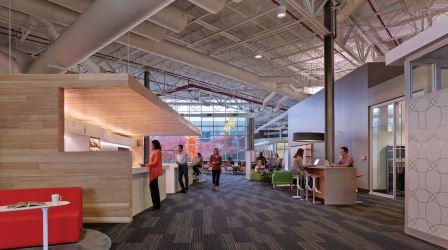
The layout design must be able to offer a wide range of options in support of the variety of activities to be carried out within the company.   In this way, each worker can choose the environment best suited to the task, rather than working in a single place and being “chained” to a desk.

Flexible alternatives, such as “hoteling,” where space is no longer individual but can be shared with other workers, facilitate the increase of interpersonal relationships, the exchange of information and knowledge, and innovation.   This allows for better collaboration both inside and outside the office and provides enough flexibility to mitigate the risk of catastrophic or disruptive incidents within the company.

. Equipment

Layout changes will also influence equipment design. This component must be able to adapt (to be reconfigured, transported, and so on) so as to allow both individuals and groups to carry out their tasks according to the needs of any given moment. This way, planning also helps to minimize risks.

The furniture is flexible and interchangeable and shows variety, like a stage than can be easily reconfigured. Ergonomics and comfort are essential, with an emphasis on working surfaces, including blackboards for spontaneous collaboration.

. Technology

These new distributed ecosystems of work with an increasingly spread-out workforce require a closer interaction between co-workers and customers. Within this fluid environment, technology plays a fundamental role in providing agility and flexibility. A highly distributed workplace demands a robust and collaborative technological infrastructure.

Wireless mobile devices (laptops, smartphones, tablets, and so on) allow employees to access applications, documents and emails stored in the cloud from anywhere with an Internet connection and to work on them online (or offline, with the ability to synchronize them later.)

The cloud is a new paradigm which allows users to utilise the infrastructure set up by a provider through the web anytime and anywhere.  This way, physical restrictions are eliminated and the operating environment is virtualised, an indispensable condition when work is being done from mobile devices with no storage capacity. In addition, the ubiquity of cloud services allows the workforce to operate within an environment of mobile, flexible collaboration.

The same flexibility which improves the ability to work outside the office also increases resilience in facing adversity. Additionally, cloud service providers offer back-up systems which reduce the likelihood of information loss or lack of service in case of misfortune.

. Management Strategies

In order to build a truly flexible organisation, individuals must be empowered to work where, how and when they want: work is not where they are, but what they do. To this end, companies will also have to change the way they measure productivity, from a system which counts the hours spent in the office to a goal-based management system.

. Leadership

Executives are in charge of setting the course for the organisation by developing a business vision, and of aligning and inspiring people to both reach their goals and overcome obstacles.  Therefore, resilience begins when corporate leaders are able to establish priorities, assign resources and take on the required commitments to ensure the company’s recovery from any contingency, clearly communicating their commitment to whatever measures and investments prove necessary for the creation of a highly mobile and distributed working style.

. Corporate Culture

A resilient culture is built on principles such as organisational empowerment and a strong sense of purpose, trust and responsibility, as well as on employee networks which can organise themselves into communities and with the ability to participate in, manage and organise virtual teams. It is these empowered and interconnected employee networks which form the basis of a resilient organisational culture.

. Communication

In order to face any measures required by a change in conditions (whether planned or disruptive), it becomes necessary to implement a well-directed internal communications plan, so as to benefit organisational cohesion and avoid issues of decreasing trust, responsibility or productivity.

A resilient workplace can only be successful if it trains and supports employees to work in new ways. When people are adequately selected, motivated, equipped and managed, they can overcome almost any obstacle or interruption.

Conclusions

Resilience is a company’s ability to respond quickly and effectively to any type of unexpected changes. A resilient workplace is an ecosystem of spaces which have been designed to evolve and adapt to any contingency, optimising the use of physical assets and fostering employees’ active participation.

In order to build a resilient company, one must keep in mind the elements that make an organisation truly flexible and adaptable: executives who are thoroughly prepared, effective leaders; a motivated and proactive workforce; a working culture and a set of values that uphold change; and a distributed environment which, in conjunction with a solid and collaborative technological infrastructure, can facilitate goals and function as an adequate support system to respond to any unexpected changes.


SOURCE: FM & WORKPLACES

Gamification: Heads or Tails

Technological advancement and the arrival of new generations into the workforce have resulted in major changes in the corporate world. Suddenly old offices crammed with dull, uniform cubicles gave way to open, informal and laid-back spaces filled with bars, playrooms, large sofas and vibrant colours.   Nonetheless, much like the open office and many other trends, the fun-and-games formula, nowadays considered the standard, is far from infallible or universally applicable. If companies want this strategy to succeed, it’s not enough to create workplaces which support their working culture and processes.  They must also recognize that, when fun becomes an obligation, responses can vary as wildly as human beings are diverse: from acceptance and excitement to indifference and discomfort.

A few decades ago, an American psychiatrist named Stuart Brown began a study about the psychological profile of young American murderers. As a result of his investigation, Brown discovered that these individuals had something in common: a life deprived of play.   Thus, he realised that prolonged play deprivation can have devastating consequences on someone’s general well-being and skill development.

The urge to play is inherent to humans —though not exclusive, since many animal behaviours are partly based on play—, and it has been favoured and refined through evolution for over a hundred million years. Play facilitates learning of social, bodily and emotional regulation; it improves empathy and cooperation; it provides experiences which benefit our ability to recover; it decreases stress and develops curiosity and mutual trust.  Play helps to rehearse and improvise behaviours and reactions more effectively, therefore preparing us for the unexpected in an unpredictable environment.

Dutch historian and anthropologist Johan Huizinga had already proposed this view of the importance of play in the early twentieth century.   Huizinga –who claimed our species would be better defined as homo ludens than homo sapiens– suggested that play is an essential component in the development of human culture.

Studies conducted by the University of Gloucestershire indicate that playing is a way of experiencing sensations and emotions —through interaction with our social and physical environment— which gives the player a sense of control.  This affects both the brain’s structural development and genetic expression, and further motivates us to play and seek physical and emotional pleasure in new and flexible ways.

This neuroscientific approach reveals that all types of mammals possess a brain system that allows play.  Play is a powerful source of motivation and gratification which stimulates the brain’s reward centres, which respond by releasing dopamine and oxytocin, two neurotransmitters in charge of mediating pleasurable sensations.

These insights have not gone unnoticed in the corporate world. Companies have begun to see the integration of play areas and recreation into the workplace as a solution to some of the most common issues faced by modern organisations: high levels of stress, a weaker sense of community and loyalty, and constant staff turnover.

What Is Gamification?

The opposite of play is not work — the opposite of play is depression. Stuart Brown.

With a view to transforming work into a positive experience, many companies are currently developing practices and initiatives which aim to improve collaborators’ overall disposition.  One such practice is gamification, defined  as a strategy which introduces elements of play into the workplace in order to improve employees’ emotional state and direct them in the accomplishment of particular goals.

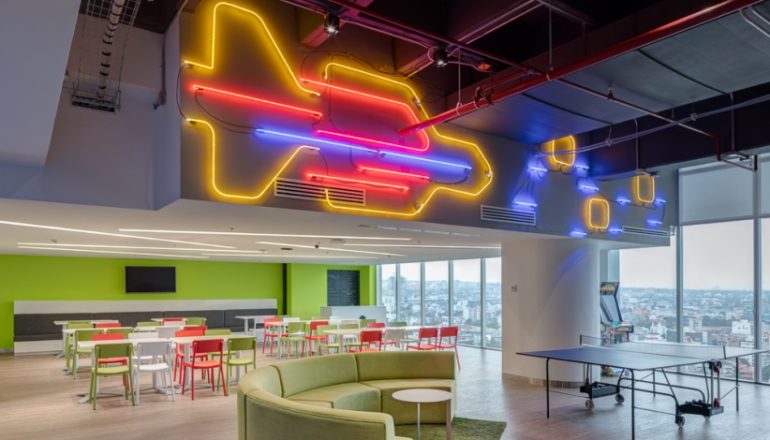
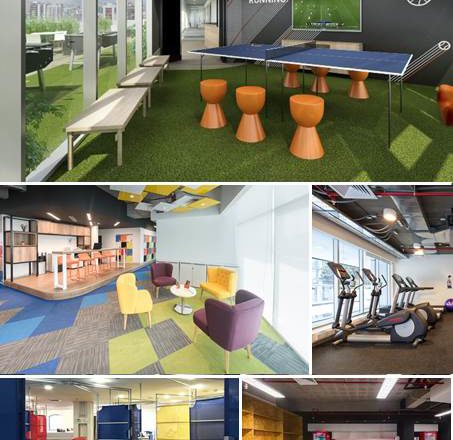
This trend, born in the 1990s as a novelty exclusive to technological and digital-media start-ups, and which aimed to make the young workers of the new generations feel valued, to gain their loyalty and retain them as employees, is now the standard in cutting-edge companies.    Cafeterias, ping-pong and table football, and corporate celebrations and retreats are now must-have features of the modern office.

Gamification can include all types of play, from traditional board games, to outdoor games, role-playing, competitions and even modern videogames.  This stems from the view that human beings are competitive, playful creatures even in adulthood.  The huge popularity of sports is a testament to the basis of this claim.

Consequently, gamification is consolidating its position as an extremely valuable alternative.  So much so that Gartner Consulting estimates that over 50% of organisations interested in innovation will introduce gamification into their business plan in the next few years.

Benefits

As we have seen, play stimulates the reward mechanisms in the brain, generating a sense of gratification and stimulating both learning and the repetition of positive behaviour. For this reason, incorporating a space for play and recreation into the office can result in several benefits.

Trends indicate that, beyond financial retribution, young workers value having fun at work.  In fact, millennial- and post-millennial employees believe fun at the workplace to be a requirement, rather than a bonus.  Hence, companies have begun to accept the need to create a playful, creative working environment if they want to recruit and retain a talented workforce.

With a well-planned and well-managed recreation scheme which takes into account employees’ interests, tastes and differences in gender, age, and so on, playful activities can become a tool to combat stress and increase learning and productivity, as well as reduce absenteeism and improve mental and physical health. Play helps to build trust and improve communication, as well as fostering creativity, participation and a shared culture where all collaborators have the opportunity to meet and interact in an informal environment.

In short, playful activities in the workplace have a positive influence on employees’ performance and can contribute to high levels of commitment.  These activities are key for employee bonding and the development of skills like leadership and communication.

Nevertheless, it must be said that, rather than making work more satisfying and meaningful, play provides a “game layer” which changes the working experience without redesigning the very nature of the work itself.

What Happens When Fun Is Mandatory?

As we have seen, games and recreation in the workplace have a positive impact on staff.  Yet gamification, like other management initiatives, can bring about unwanted results.

According to Johan Huizinga’s outline, play must be voluntary and disconnected from material interest, it must be limited in space and time, and must possess a system of rules.  However, when gamification strategies are implemented in companies, voluntary participation often becomes secondary or goes completely unnoticed.  Even though the goal of playful activities is to improve working conditions, it must be remembered that gamification does not comply with the requirements according to which play must be free, voluntary and disconnected from material interest.

Mollick and Rothbard, in turn, claim that games are usually fun precisely thanks to their elements of spontaneity, surprise and, often, subversion of the existing order of things.  Nonetheless, with gamification, spontaneous activities, such as informal socialising between workers, can become planned management initiatives, like corporate celebrations or retreats, thus giving rise to the introduction of a new notion, that of “mandatory fun.”

In order to figure out the mandatory-fun paradox and understand which play-related initiatives can improve workers’ emotional state and consequently their performance, it’s crucial to obtain their express, voluntary consent; otherwise they will see such initiatives as imposed by management.

A major difference between spontaneous play and gamification is that the former involves games initiated by workers themselves, whereas with the latter, games are imposed vertically from management and are designed to reinforce management goals.

If employees are compelled to participate in a game, competition, tournament, celebration or any other corporate-mandated “fun” activity, responses are bound to be as varied as human beings are diverse: some will accept it, some will ignore it and some will feel uncomfortable or upset.  Therefore, the diversity of the workforce in terms of personality (introverted or extroverted), age, gender, interests, and so on, must not be overlooked.

Conclusions

Play is socially, emotionally, cognitively and physiologically key for many animals, including human beings.

For adults, play can be a creative way of solving problems and releasing emotional tension, as well as stimulating flexibility and the ability to face stressful situations more resourcefully.

Companies which adopt gamification in the workplace do more than satisfy their employees’ physical and psychological needs:  they also improve staff recruitment and retention, increase productivity, reduce absenteeism rates and boast a happier, more relaxed and committed workforce.

While it is true that implementing playful activities to motivate workers improves the working environment and increases productivity, the role of consent as a relevant psychological response must not be overlooked. When participating in the fun becomes a mandatory requirement, employees may feel uncomfortable due to the impossibility of managing their task schedule or choosing how and with whom to spend their free time. Knowing that other options are available is healthier and can reduce reluctant employees’ opposition.


SOURCE: FM & WORKPLACES

Bayer office design by Contract Workplaces

Bayer Offices – Buenos Aires

Contract Workplaces  were engaged by pharmaceuticals company, Bayer , to create a new design for their office located in Buenos Aires, Argentina.

Bayer wanted a change of image from their offices dating from the beginning of the 90s. The technology has changed and has significantly changed the use of space.

The experiences in Chile and Uruguay were the result of the departure of the project from Argentina and the challenge to those two success locations. The open space and the absence of closed offices, which includes spaces of relaxation, meeting rooms of 2, 4 and 6 people, social spaces and an improvement in the use of common spaces.

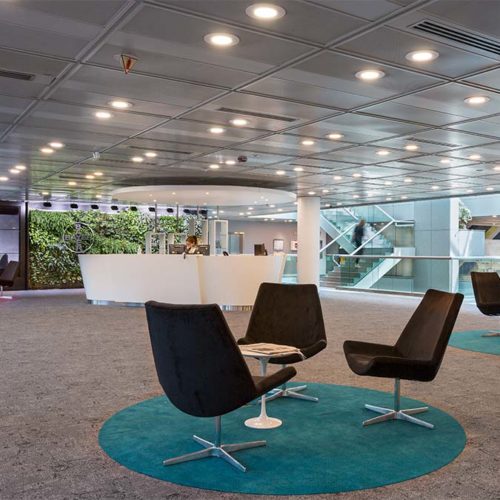
The design-considered transparency and natural light, ie aspects of modernity, technology and better use of square meters.


SOURCE: Office Snapshots

Dupont Colombia

DuPont Offices – Bogotá

Contract Workplaces transformed DuPont‘s existing offices into a collaborative workspace located in Bogotá, Colombia.

The construction work at DuPont Colombia posed a great challenge for Contract Workplaces, as it involved redesigning a space that had so far reflected a 100% traditional and conservative work model, with many closed offices and a strong distinction of hierarchical positions. Furthermore, the space did not include collaborative areas devoted to interaction and relaxation.

Therefore, in these new offices, a dynamic and open design was presented, generating areas for group collaboration, as well as private work spaces intended for those tasks requiring more concentration. The 1,125 m2 floor space now accommodates 102 workstations, two hot desks for six persons each, grandstands for trainings or multimedia meetings with other branches, four conventional meeting rooms automated with state-of-the-art videoconference and projection technologies, a relaxation room which can also be used to hold recreational activities, a medical office, a breastfeeding room and the canteen, which can also be used for informal meetings.

The new design thus achieved the perfect transition from a conservative work model to one adapted to current working trends with an elegant, modern and timeless design. This renovation, in turn, reflects the corporate image of a company which, after 216 years of history, is transforming to adapt to the new times.


SOURCE: Office Snapshots

Contract Workplaces construye las nuevas oficinas de Raíces Real Estate

Contract Workplaces, la compañía regional de conceptualización, diseño y construcción de espacios de trabajo, ha sido elegida por Raíces Real Estate -empresa de desarrollo inmobiliario en Paraguay- para encargarse del proceso de consultoría, diseño y construcción de las nuevas oficinas de la firma, que se ubicará en el piso 16 de la Torre 1 del Paseo La Galería, en el nuevo eje corporativo de Asunción.


Contract Workplaces, la compañía regional de conceptualización, diseño y construcción de espacios de trabajo, ha sido elegida por Raíces Real Estate -empresa de desarrollo inmobiliario en Paraguay- para encargarse del proceso de consultoría, diseño y construcción de las nuevas oficinas de la firma, que se ubicará en el piso 16 de la Torre 1 del Paseo La Galería, en el nuevo eje corporativo de Asunción.

Contract Workplaces tiene 20 años de experiencia y es un referente internacional en la arquitectura corporativa de vanguardia, alcanzando el año pasado 150.000 metros cuadrados de espacios de trabajo diseñados y construidos en la región.

La empresa desembarcó en Paraguay en 2015, donde ya realizó más de 25 obras y proyectos que superan los 5.000 metros cuadrados. Los exitosos resultados de gestión de Contract Workplaces llevaron a la compañía Raíces Real Estate a conocer su propuesta.

“Estábamos en la búsqueda de un cambio de imagen, para dar una señal al mercado de la profesionalización y de una cultura mucho más competitiva y corporativa a nivel local”, explicó Vicente Soteras, encargado de negocios corporativos de Raíces Real Estate.

PASO PREVIO PARA UN DISEÑO EXITOSO

El trabajo entre ambas compañías se inició con una consultoría en workplace strategy, un servicio de Contract Workplaces que implica un enfoque sistemático orientado a mejorar la utilización del espacio de trabajo, interviniendo sobre su configuración para hacerlo más eficiente.

Este  proceso permite aportar una mirada integral y profunda sobre algunos aspectos no contemplados en los proyectos convencionales, posibilitando anticipar los riesgos y asegurar el éxito del diseño, sacando provecho de todo el potencial que este importante activo estratégico representa para la organización.

“Fue una tarea muy interrelacionada y dinámica; internamente hicimos el ejercicio de ver las conexiones entre las distintas áreas y el flujo de trabajo entre las personas para poder entenderlo y consolidarlo en el espacio corporativo. Concretamente, en nuestras nuevas oficinas nuestro equipo estará más integrado y los departamentos que tienen mayor flujo de trabajo estarán próximos entre sí, generando mayor eficiencia en el trabajo”, explicó Soteras.

Como compañía de diseño y construcción, Contract Workplaces se destaca por su capacidad de vislumbrar tendencias y adaptarlas a cada contexto laboral, logrando implementar cambios en las oficinas que impactan positivamente sobre el trabajo en equipo y la optimización de los espacios.

En el caso de Raíces Real Estate, el espacio funcionará como una oficina showroom con una fuerte impronta corporativa. Por eso se pensó en un diseño moderno, sobrio y atractivo, que muestre la pujanza de la empresa, su visión estratégica de negocios y su liderazgo en el sector inmobiliario.

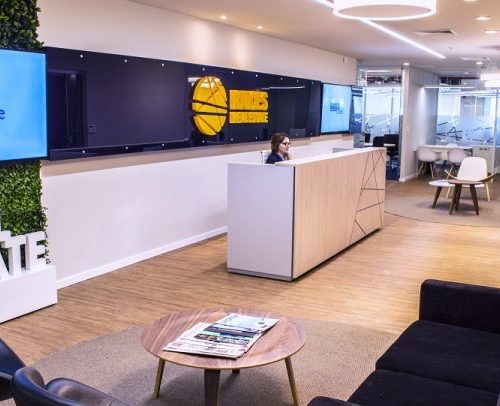
La meta es transmitir una imagen fresca y moderna, sustentada en un espacio de trabajo armónico con vastos espacios abiertos y compartidos, salas de reuniones para los distintos tipos de actividad, un gran open office, despachos privados y una importante recepción, desde la que ya se puede observar el potencial de la empresa y de su equipo, al tiempo de apreciar los productos que Raíces Real Estate desarrolla y comercializa.

El proceso de renovación de Raíces Real Estate se inició seis meses atrás y en este momento la obra se encuentra en plena ejecución. Próximamente, podrá disponer de un espacio adaptado a las nuevas formas que adquiere el mundo laboral, donde la flexibilidad y  la colaboración son las premisas ineludibles a la hora de repensar el espacio de trabajo.

“Estamos convencidos que el nuevo diseño de Raíces Real Estate genera el entorno ideal para desarrollar al máximo su potencial, promoviendo la comunicación entre las áreas de trabajo y  el bienestar de su equipo, además de reforzar la cultura e identidad de la compañía”, aseguró Rafael Flom, director ejecutivo de Contract Workplaces Paraguay.

SERVICIO INTEGRAL

En sus dos décadas de experiencia, Contract Workplaces resignificó sus estrategias de acuerdo a los avances tecnológicos y los nuevos escenarios que se planteaban en las diversas industrias, logrando un servicio integral que incluye: consultoría en workplace strategy, diseño, proyecto arquitectónico, construcción, tecnología, logística de mudanza, change management y servicios de post ocupación.

Todo eso es posible gracias al trabajo de un equipo multidisciplinario de profesionales en la región, compuesto por más de 300 expertos preparados para dar respuestas a todos los aspectos estratégicos, técnicos y logísticos que exige un proyecto.

Oficinas: Espacios para mejorar el clima laboral

Medio: Revista Clarín Pymes

Generar lugares de descanso e interacción “Tener estos recreos durante el día, ayuda a pensar más claramente”, explican en Belatrix.  “Muchas veces estos momentos sirven para desarrollar en forma más relajada nuevas ideas con los compañeros”, dice Horacio Cappa, de Belatrix.
En el diseño de oficinas, algunas de las nuevas tendencias apuntan a beneficiar la vida cotidiana de los empleados, logrando así empresas más exitosas.

Cuando un sitio de trabajo incorpora elementos pensados para la salud física y mental de sus empleados, así como en el alivio del estrés y la presión que generan las largas jornadas laborales, no es difícil imaginar una mejora en la productividad. `Hoy, se tiende a promover el trabajo colaborativo, la fluidez en las comunicaciones, la informalidad, la calidad de la vida laboral, la diversión y el trabajo (no diversión versus trabajo). Se busca que haya menos jerarquías y mayor horizontalidad en las estructuras organizativas`, explica Daniel Cohén, de Miller Zell, especializado en generar la estructura de oficinas que apunten a que todo esto se dé.

“Estas nuevas oficinas ayudan a lograr que los recursos humanos estén en mejores condiciones físicas y mentales y, en definitiva, que los negocios funcionen mejor y más efectivamente”, afirma la psicóloga Sandra Goldstein, especializada en relaciones laborales.

Los cambios llegaron de la mano de los “millenial”-nacidos entre 1981 y 1995- y se expanden hacia las generaciones mayores. “Para las generaciones jóvenes, la diversión en el lugar de trabajo es un requisito, no sólo un beneficio”, explica Alejandro Mariani, gerente general de Contract Workplaces Argentina. Y agrega que las empresas empiezan a reconocer la necesidad de crear un ambiente de trabajo lúdico y creativo, para reclutar y retener talentos.

El diseño de oficinas cambió: sumó ventanales, salas de reuniones con sillones y mesas bajas, equipos de playstation, ping-pong, metegol, guitarras y juegos de mesa; salas de descanso con pufs, hamacas paraguayas y enormes sillones; y hasta salas de masajes, cintas y bicicletas para hacer gimnasia.

“En la Argentina, tenemos espacios para jugar al metegol, ajedrez, ping-pong y videojuegos. Hay un lugar para meditar. Además, tenemos un gimnasio, una sala de masajes, una sala de música con instrumentos y una de yoga”, cuenta Florencia Sabatini, de Google Argentina.

Si bien parece una misión imposible que una pyme pueda hacer estas transformaciones, algunas de ellas sólo exigen un cambio de `chip`. Por ejemplo, para sumar hábitos saludables se pueden comprar 2 kilos de fruta por día, o bien utilizar alguna superficie sin uso para una sala de yoga, o -con una inversión moderada- animarse a una bicicleta fija y una cinta. `A través de su cultura corporativa, una empresa puede contribuir a mejorar la salud de los trabajadores. También es posible fomentar la alimentación sana ofreciendo frutas en el comedor como snacks para media tarde y media mañana`, cuenta Mariani.

Según los especialistas de Contract Workplaces, `este tipo de espacios complementarios influyen positivamente en el desempeño, ya que pueden ser la liberación necesaria para combatir el estrés en la oficina, contribuir en el aprendizaje, aumentar la productividad y bajar los niveles de ausentismo`.


Abrir las oficinas a la luz natural: ”El sol conecta con el afuera y relaja el estrés”, dice Daniel Cohén, de Miller Zell.

Bienestar: “Para sentirnos bien, todos necesitamos luz natural y vistas al exterior`, explica la psicóloga Sandra Goldstein.

Plus: Además, se genera ahorro energético y se cuida el medio ambiente, valores que logran mayor fidelización.

Valores lúdicos: Son prácticas que llegaron de la mano de los “millenials”, pero que nadie rechaza.

Relax: ”Jugar es una terapia exitosa para tratar el estrés, la ansiedad y la presión laboral”, explica Goldstein.

Beneficios: “Está comprobado que un tiempo para el juego optimiza la productividad de la empresa”, cuenta Alejandro Mariani de Contract Workplaces.

Promover hábitos saludables: “Sentirse bien es necesario para poder desarrollarse en distintos ámbitos”, afirma Goldstein.

Herramientas: Gimnasios, clases de yoga, sala de masajes, espacios para meditación. Distintas alternativas que van llegando a las oficinas.

Cuidados: Promover que los empleados estén más sanos física y mentalmente, disminuye el ausentismo en las empresas.

Reuniones como en el “living”: “La clave del éxito radica en el intercambio de ideas y el trabajo en equipo”, dicen en Google.

Más relajados: La falta de estructura y la comodidad en las reuniones genera mayor horizontalidad y que surjan ideas más frescas.

En desuso: “Las mesas enormes con el gran sillón en la punta dejaron de usarse porque las nuevas generaciones las rechazaron”, dicen en MillerZell.

Cómo lograr un mejor uso del color en el espacio de trabajo

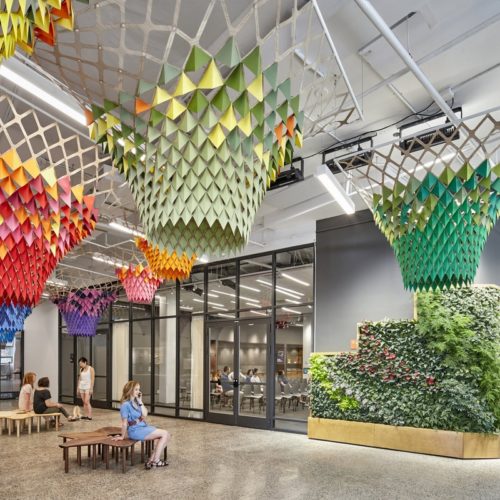
La modernidad y el progreso han alejado al hombre de la naturaleza. Cada vez pasamos más tiempo confinados dentro de entornos artificiales sin contacto con el aire libre, la luz natural o la vegetación ¿puede un espacio de trabajo ayudar a recomponer ese vínculo? Para muchos investigadores y diseñadores la respuesta está en la biofilia, ese sentido innato de conexión con la naturaleza que resulta esencial para especies como la nuestra, cuya supervivencia depende de su relación con el ambiente.


No solo necesitamos luz natural, vistas al exterior, plantas y elementos naturales para satisfacer nuestra necesidad de conexión con la naturaleza dentro del espacio de trabajo, la elección de los colores también puede ser un factor fundamental, que muchas veces se descuida. La psicología sugiere que los humanos tenemos una preferencia innata por los colores presentes en la sabana, que indican la presencia elementos como agua limpia, tierra, rocas, vegetación, frutas, flores, entre otros. Un informe reciente revela que las oficinas que incorporan colores que se asemejan al entorno natural, tales como el verde, el azul o el marrón, tienen un impacto positivo sobre el bienestar de los empleados. Por el contrario, el uso de los blancos y grises tiene un impacto negativo en los niveles de estrés. En definitiva, la forma en que se utilice el color no es un tema menor dado que puede alterar completamente la apariencia del espacio y, al mismo tiempo, influir en el estado de ánimo y la creatividad de las personas.


“En el mundo altamente industrializado y tecnológico de hoy se pueden diseñar espacios eficientes en términos energéticos, operativos y funcionales, pero si se ignora la profunda necesidad humana de contacto con la naturaleza, algo faltará”, asegura Fernando Marconi, Gerente de Arquitectura y Diseño de Contract Workplaces Argentina, compañía regional líder en diseño y construcción de espacios de trabajo.


Un ambiente realmente eficiente también debe incluir características capaces de satisfacer las necesidades emocionales de las personas, ayudándolas a sentirse cómodas en los lugares donde trabajan, más saludables, sin estrés, y en contacto con su propia naturaleza.


EL COLOR EN EL ESPACIO Y SU IMPACTO EN LAS PERSONAS

“Aunque el color puede parecer una cualidad superficial que casi no influye en la función de los elementos artificiales que nos rodean, la mayor parte de la gente le otorga mucha importancia al aspecto cromático de los objetos, una de sus características más personalizables. Lo mismo sucede con los entornos de trabajos”, señala Marconi.


Un espacio donde predominan los colores de la naturaleza tiende a percibirse como un lugar saludable, donde uno puede sentirse estimulado o relajado. Existe una clara preferencia por los verdes oscuros o intermedios (reducen el ritmo cardíaco y la presión sanguínea aliviando el estrés), mientras que los anaranjados, amarillos pálidos o marrones típicos de la vegetación estresada o moribunda son los menos deseados. Además, el color rojo puede estimular los procesos cognitivos y la atención, factores necesarios para tareas que requieren un gran esfuerzo y concentración mental. Por su parte, el color azul y algunos verdes intermedios pueden ayudar en las tareas que requieren creatividad.

El uso de colores vivos debe hacerse con prudencia, a modo de acentos, y enfatizando los tonos que se encuen

tran en formas ambientales naturales atractivas tales como las flores, los ocasos, el arco iris, entre otros.


COLOR Y CREATIVIDAD

Según investigaciones que exploran el efecto del color sobre la cognición y el comportamiento de las personas, la incorporación de acentos de color verde, azul y amarillo produce efectos beneficiosos sobre la creatividad de los empleados. De hecho, los resultados del estudio revelaron que el color verde era el que ejercería mayor influencia. Mientras que las oficinas grises están asociadas con niveles bajos de creatividad del empleado, los colores vivos, como el amarillo, el azul y el verde, la favorecen.


Asimismo, los esquemas de colores de las oficinas que incorporan acentos verdes, azules y marrones indican más felicidad, productividad y creatividad de los empleados, en comparación con muros blancos. No obstante, cabe destacar que los colores particulares asociados con estos resultados pueden presentar diferencias culturales entre los países.


EL COLOR, UN ELEMENTO DEL DISEÑO

Para que el diseño de la oficina sea verdaderamente eficaz, es tan importante abarcar los aspectos funcionales del espacio como su dimensión emocional. Para satisfacer nuestra necesidad de conexión con la naturaleza dentro del espacio de trabajo, no solo necesitamos luz natural, vistas al exterior, plantas y elementos naturales, la elección de los colores también puede ser un factor fundamental.


IMPACTO DE LOS COLORES EN LA OFICINA

-MOTIVACIÓN:  Azul & Blanco

-PRODUCTIVIDAD: Azul, Morado, Amarillo, Gris & Blanco

-INSPIRACIÓN: Amarillo, Morado & Blanco

-FELICIDAD: Verde, Azul & Blanco

-CREATIVIDAD: Amarillo, Azul, Verde & Blanco

-ENTUSIASMO: Naranja, Verde, Azul & Blanco

-ESTRÉS: Gris

Fuente: HUMAN SPACES (2015): “The GlobaI Impact of Biophilic Design in the Workplace”.

Espacios que integran

Medio: Revista América Economía Perú

Sección: Tendencias / Inmobiliario

Las grandes empresas apuestan por ofrecer espacios de trabajo que se adapten a sus culturas y a las necesidades de sus colaboradores con espacios flexibles y colaborativos que ayudan a mejorar la eficiencia y productividad.

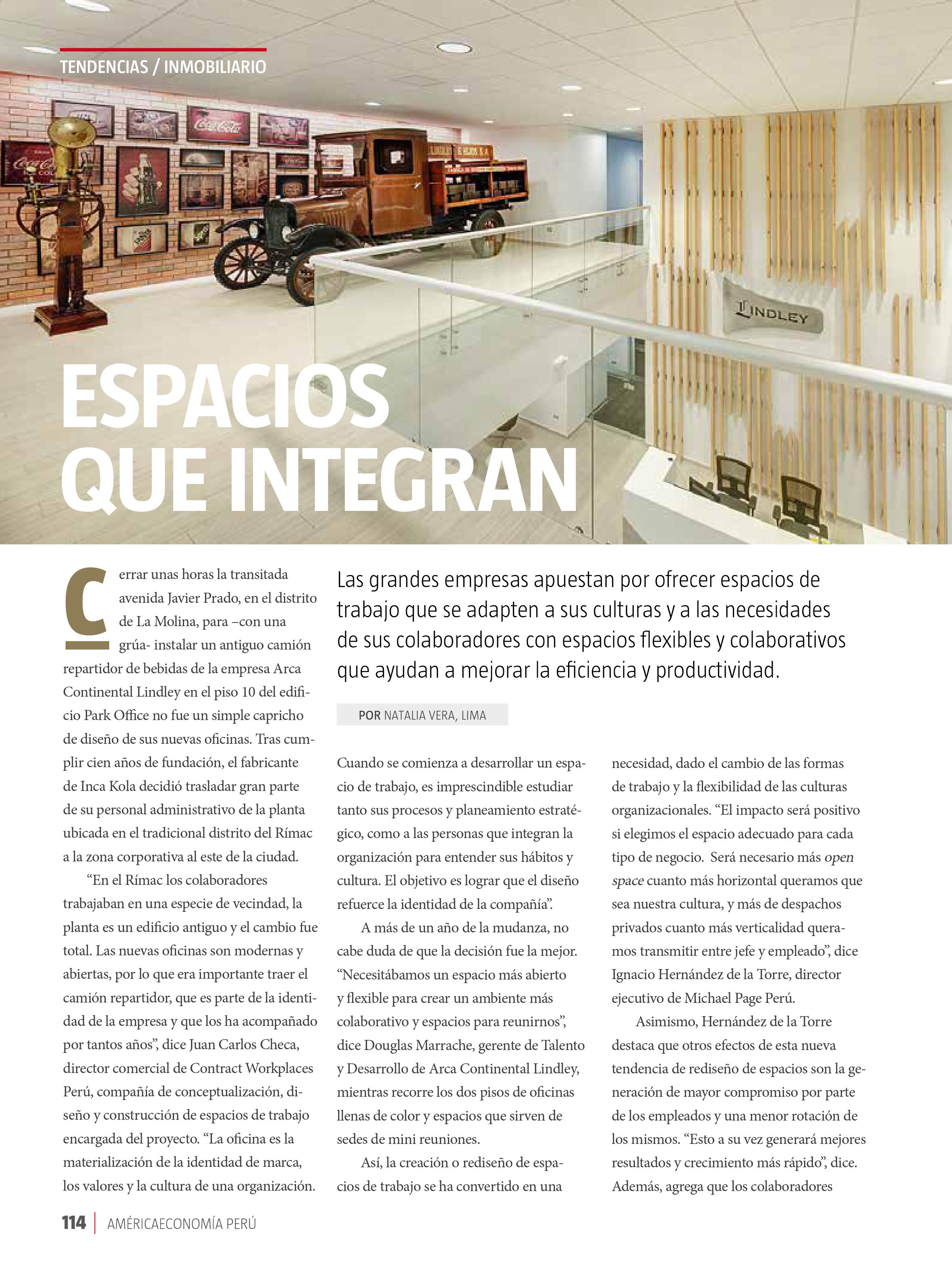
Cerrar unas horas la transitada avenida Javier Prado, en el distrito de La Molina, para -con una grúa- instalar un antiguo camión repartidor de bebidas de la empresa Arca Continental Lindley en el piso 10 del edificio Park Office no fue un simple capricho de diseño de sus nuevas oficinas. Tras cumplir cien años de fundación, el fabricante de Inca Kola decidió trasladar gran parte de su personal administrativo de la planta ubicada en el tradicional distrito del Rímac a la zona corporativa al este de la ciudad.


“En el Rímac los colaboradores trabajaban en una especie de vecindad, la planta es un edificio antiguo y el cambio fue total. Las nuevas oficinas son modernas y abiertas, por lo que era importante traer el camión repartidor, que es parte de la identidad de la empresa y que los ha acompañado por tantos años”, dice Juan Carlos Checa, director comercial de Contract Workplaces Perú, compañía de conceptualización, diseño y construcción de espacios de trabajo encargada del proyecto. “La oficina es la materialización de la identidad de marca, los valores y la cultura de una organización.

Cuando se comienza a desarrollar un espacio de trabajo, es imprescindible estudiar tanto sus procesos y planeamiento estratégico, como a las personas que integran la organización para entender sus hábitos y cultura. El objetivo es lograr que el diseño refuerce la identidad de la compañía”. A más de un año de la mudanza, no cabe duda de que la decisión fue la mejor. “Necesitábamos un espacio más abierto y flexible para crear un ambiente más colaborativo y espacios para reunirnos”, dice Douglas Marrache, Gerente de Talento y Desarrollo de Arca Continental Lindley, mientras recorre los dos pisos de oficinas llenas de color y espacios que sirven de sedes de mini reuniones. Así, la creación o rediseño de espacios de trabajo se ha convertido en una necesidad, dado el cambio de las formas de trabajo y la flexibilidad de las culturas organizacionales. “El impacto será positivo si elegimos el espacio adecuado para cada tipo de negocio. Será necesario más open space cuanto más horizontal queramos que sea nuestra cultura, y más de despachos privados cuanto más verticalidad queramos transmitir entre jefe y empleado”, dice Ignacio Hernández de la Torre, director ejecutivo de Michael Page Perú. Asimismo, Hernández de la Torre destaca que otros efectos de esta nueva tendencia de rediseño de espacios son la generación de mayor compromiso por parte de los empleados y una menor rotación de los mismos. “Esto a su vez generará mejores resultados y crecimiento más rápido”, dice. Además, agrega que los colaboradores valoran mucho la ubicación de la oficina y el hecho de que la empresa invierta en materiales y acabados de calidad.

“Una organización que se preocupa por la salud, el confort y el bienestar de su personal tendrá una mejor imagen. Brindar a los empleados espacios  confortables, ergonómicos y saludables influye sobre la percepción que tienen sobre los valores de la empresa y alimenta el círculo virtuoso de la reputación institucional”, dice Juan Carlos Checa.


El año pasado el mercado de oficinas cerró con una vacancia de 30%. Es un indicador duro, pero es una oportunidad para que empresas medianas y pequeñas empresas se muden a otros distritos.


En Contrucción

Remodelar la oficina requiere de una inversión de entre US$ 700 y US$ 800 el m2, según Contract Workplaces Perú, empresa de origen argentino y con presencia en 10 países en la región. Las áreas de remodelación, de acuerdo con datos de la compañía, van desde 250 m2  hasta 2.000 m2. El promedio de proyecto u obra realizado durante 2016 en el Perú fue de 750 m2. No obstante, no son solo las grandes empresas las que están dando este paso. “Cada vez más empresas pequeñas, familiares o startups se están mudando a oficinas en

Zonas más céntricas o estratégicas. Ello debido a que existe una sobreoferta

en el mercado de edificios corporativos de oficinas”, dice Juan Carlos Checa.

“Hay demasiados m2 de oficinas y poca absorción de esto. El año pasado el mercado de oficinas cerró con una vacancia de 30% y un área de 130.000 m2

de oficinas libres. Eso es un indicador muy duro, pero es una oportunidad para que empresas medianas y pequeñas se muden a distritos como Surco y Magdalena, donde la vacancia es mayor”. Ante esta oportunidad, Contract Workplaces Perú estima crecer 15% este año. En 2016 facturó US$ 12 millones y diseñó más de 22.000 m2  de oficinas. “Nuestro servicio integral abarca desde el inicio del proceso hasta la etapa de posocupación, y se

complementa con las consultorías en Workplace Strategy y Change Management”, dice Checa. El espacio por diseñar es vasto. No solo en la capital, sino también en el interior del país, e incluso en empresas u

organismos del sector público donde este terreno es casi virgen.

Cómo contribuye el diseño de la oficina a ser más feliz en el trabajo

Uno de los aspectos principales es diferenciar claramente entre los espacios de colaboración y privacidad, según especialista. ¿Qué significa ser feliz en el trabajo? A lo largo del tiempo se han realizado  muchas investigaciones abordando esta temática y todas coinciden en que la felicidad en el trabajo no sólo depende de la satisfacción con la tarea que se lleva a cabo, ni tampoco está relacionada exclusivamente con el nivel de remuneración.

Hoy es un hecho que otros aspectos comienzan a ganar protagonismo para que el trabajo cobre un significado positivo más allá de la cuestión económica tales como el aprendizaje, la creatividad, las relaciones personales, el reconocimiento, la seguridad, el equilibro entre la vida laboral y la vida personal, entre otros.

Así como mucho se habla sobre la felicidad en el trabajo, casi nada se ha dicho sobre el fuerte impacto que el entorno físico tiene sobre las emociones y la percepción de bienestar de los trabajadores.

Al respecto, Carolina Pérez, gerente general de Contract Workplaces Chile, compañía de conceptualización, diseño y habilitación de espacios de trabajo, explica que el lugar de trabajo no sólo debe satisfacer las necesidades básicas de las personas, sino también sus necesidades emocionales más profundas y cómo lograrlo.


“Si bien las tendencias actuales apuntan a tener una modalidad de trabajo más flexible y móvil, las personas pasan la mayor parte de su día en la oficina, es por  eso que el diseño del espacio de trabajo cumple un rol decisivo para alcanzar el objetivo de tener una oficina feliz”, asegura.

En ese sentido, la ejecutiva da seis claves de cómo debe ser la oficina para tener trabajadores felices:

  • Procurar acceso a la luz natural: el uso de divisores vidriados, la utilización de paneles bajos en los puestos de trabajo y sobre todo la distribución de las áreas de trabajo operativo por sobre las jerárquicas en zonas de mayor incidencia de luz natural.
  • Ofrecer contacto con la naturaleza: a través de tener vistas al exterior, especialmente en los espacios de uso compartido, y la creación de un entorno más natural dentro del espacio de trabajo que incluya el aporte de plantas, muros verdes y terrazas accesibles.
  • Velar por la calidad del aire interior: mantener un buen nivel de ventilación y humedad junto con una temperatura adecuada tanto en verano como en invierno.
  • Disminuir el ruido: para alcanzar un buen nivel de confort acústico que permita reducir las distracciones y mantener la privacidad, sin afectar la necesidad de comunicación y los beneficios de la interacción, hará falta una buena planificación del espacio de trabajo. La aplicación de estrategias de acondicionamiento ayudarán a reducir el nivel de ruido y las distracciones en la oficina.
  • Establecer un buen balance entre espacios de colaboración y privacidad: identificar las necesidades de interacción, privacidad y concentración permitirá aplicar los conceptos de zonificación más adecuados. Para poder lograr una interacción exitosa, es necesario ofrecer condiciones de privacidad que permitan controlar el nivel de disponibilidad hacia los demás. Se debe pensar en un enfoque equitativo entre las distintas áreas.
  • Ofrecer diversos “amenities” y servicios complementarios: una gama de espacios para satisfacer las necesidades físicas y psicológicas de los empleados, destinadas a actividades tales como clases de yoga, ejercicio, descanso o recreación, ayuda a combatir estados de ánimo que atentan contra el bienestar y el buen rendimiento.